


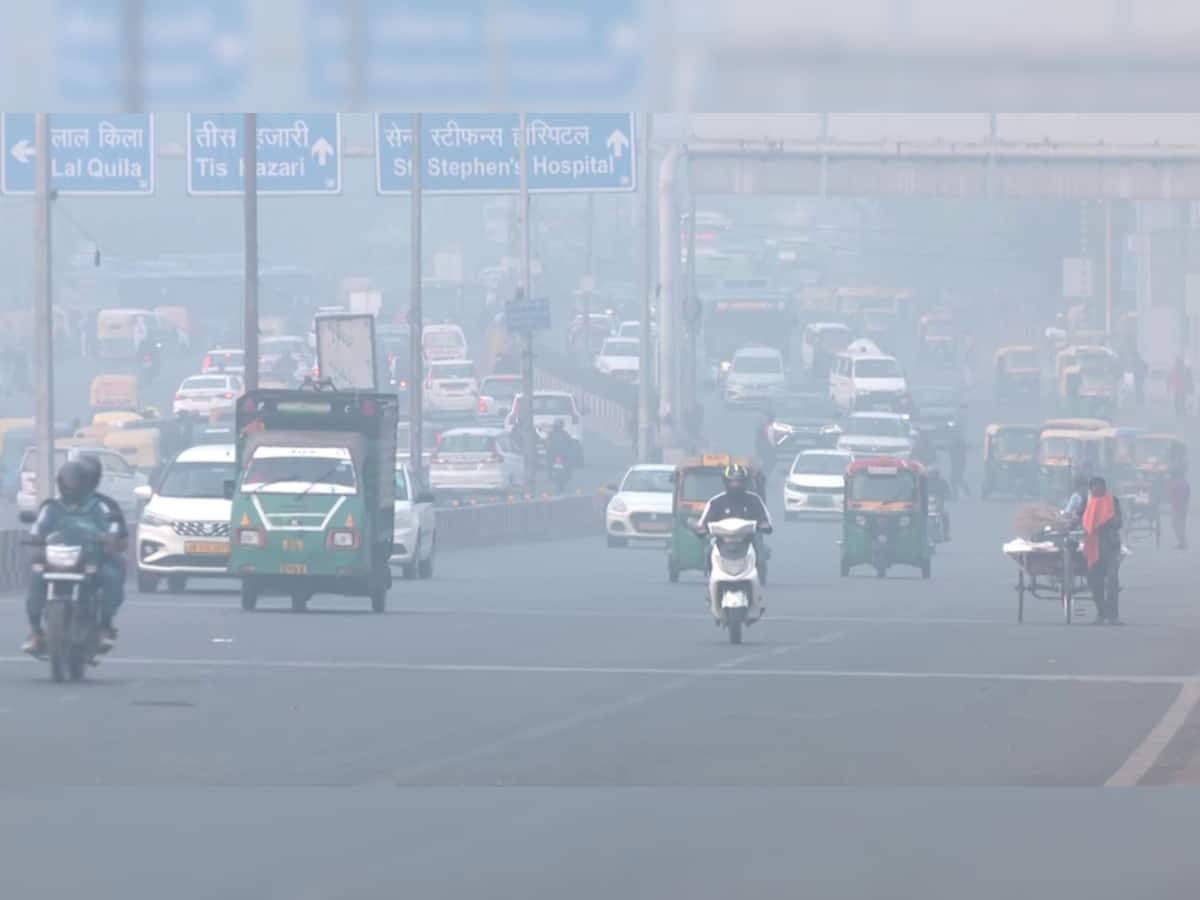

Delhi recorded a slight improvement in its air quality on Friday morning, but the overall Air Quality Index (AQI) remains firmly in the ‘very poor’ category. The Central Pollution Control Board (CPCB) data showed an AQI of 370 at 8 am, a minor recovery from the 391 recorded late Thursday. This development occurs while GRAP-III measures, designed to curb severe air pollution, are actively enforced.
Despite the fractional improvement, residents across the national capital are still breathing polluted air. Air quality at IGI Airport T3 was measured at 307, ITO at 378, and Punjabi Bagh at 379. Numerous other localities, including Najafgarh (350), North Campus DU (385), Aya Nagar (340), and CRRI Mathura Road (370), also reported high pollution levels, contributing to a thick layer of haze visible across the city.
The severity of the pollution is starkly illustrated by several areas plunging into the ‘severe’ AQI bracket. Anand Vihar recorded an alarming 418, Ashok Vihar 411, while Rohini and RK Puram reported extremely high readings of 424 and 401, respectively. These figures paint a grim picture of the air quality challenges faced by Delhi.
According to established AQI standards, readings between 301 and 400 are categorized as ‘very poor’, and anything from 401 to 500 is considered ‘severe’. The city had recently experienced dense smog, with Thursday’s average AQI at 399, showing little change from Wednesday’s 392.
This persistent pollution has led to significant legal actions. The Delhi High Court has recommended suspending outdoor sports for schoolchildren from November to January to protect their health. In parallel, the Supreme Court has directed the provision of subsistence allowances for construction workers affected by the GRAP-III ban. The court also emphasized the need for regular reviews of pollution control measures by relevant states.




.jpeg "Featured Image")