
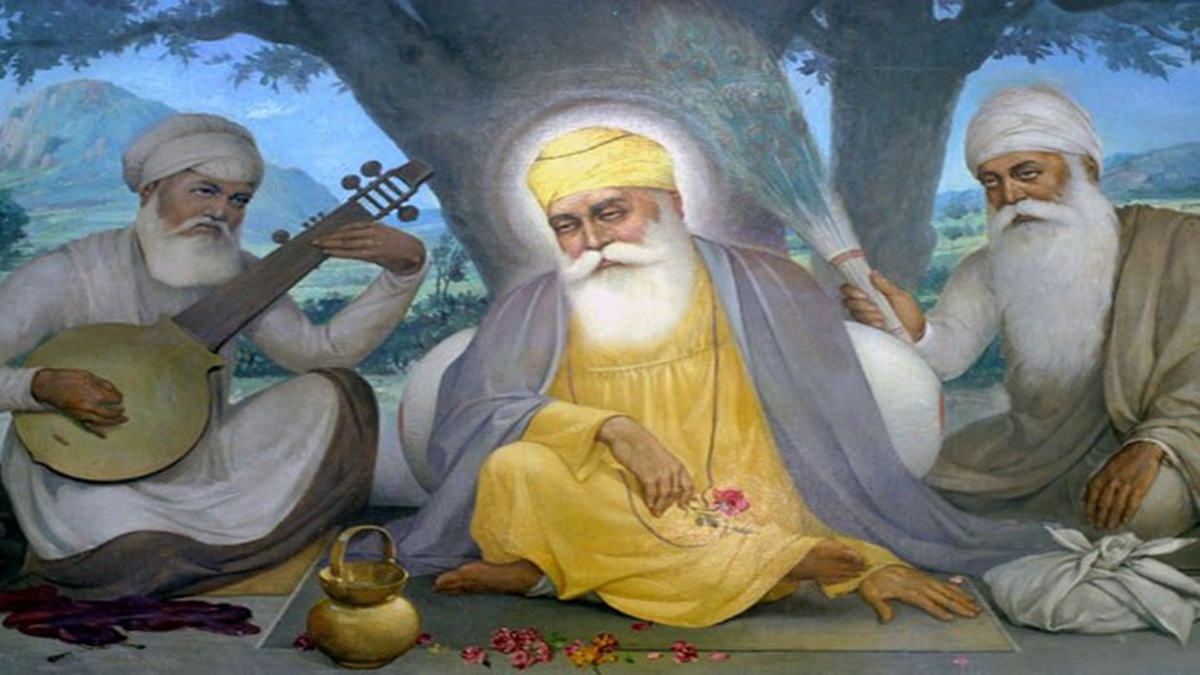

Around 500 years ago, Guru Nanak embarked on a series of extraordinary spiritual journeys, known as the ‘Udasis,’ to disseminate a universal message of divine love and challenge prevailing religious and social divisions. Traveling extensively on foot with his lifelong companion Bhai Mardana, Guru Nanak covered vast distances, crossing mountains, deserts, and diverse cultures, undeterred by any barriers.
These significant spiritual expeditions are typically understood as four major journeys. The initial Udasi led Guru Nanak eastward from Punjab, through important pilgrimage sites like Ayodhya and the sacred city of Varanasi, continuing through Bengal and Assam, and reaching as far as Nepal. In Varanasi, his interactions with religious scholars emphasized compassion and a rejection of meaningless rituals.
The second Udasi directed his path southward towards Sri Lanka and Kanchipuram, where he engaged with local spiritual leaders and questioned superstitions, promoting a more meaningful spiritual practice.
His third journey traversed the northern and central Asian regions, encompassing Kashmir, Tibet, and Tashkent. During these travels, Guru Nanak conversed with yogis, Buddhist monks, and other spiritual figures, advocating for justice and the inherent oneness of humanity.
The fourth and final major Udasi took him westward to the Arabian Peninsula, including the revered cities of Mecca and Medina, and further to Baghdad, Jerusalem, and Afghanistan. In these lands, he actively worked against prejudice, promoting tolerance and the concept of universal brotherhood among diverse religious communities.
A defining aspect of Guru Nanak’s Udasis was his unparalleled commitment to interfaith dialogue. He engaged in deep conversations with Hindu pandits, Buddhist monks, Sufi mystics, and Islamic scholars, fostering an inclusive spirituality that stood against the caste system, gender inequality, and ritualistic worship. His profound humility and insightful wisdom earned him respect and followers from all backgrounds.
After dedicating nearly two decades to these travels, covering tens of thousands of kilometers, Guru Nanak returned to establish a settlement at Kartarpur. This place became a center for spiritual learning and the development of the Sikh faith. The presence of gurdwaras, the enduring legends, and the teachings associated with each region visited by Guru Nanak serve as powerful testaments to his transformative impact on the spiritual and social fabric of South Asia.
In summary, Guru Nanak’s Udasis were revolutionary spiritual undertakings. By crossing all forms of boundaries and challenging rigid doctrines, Guru Nanak fundamentally altered the spiritual landscape of South Asia, inspiring generations with a renewed vision of unity, compassion, and social justice.