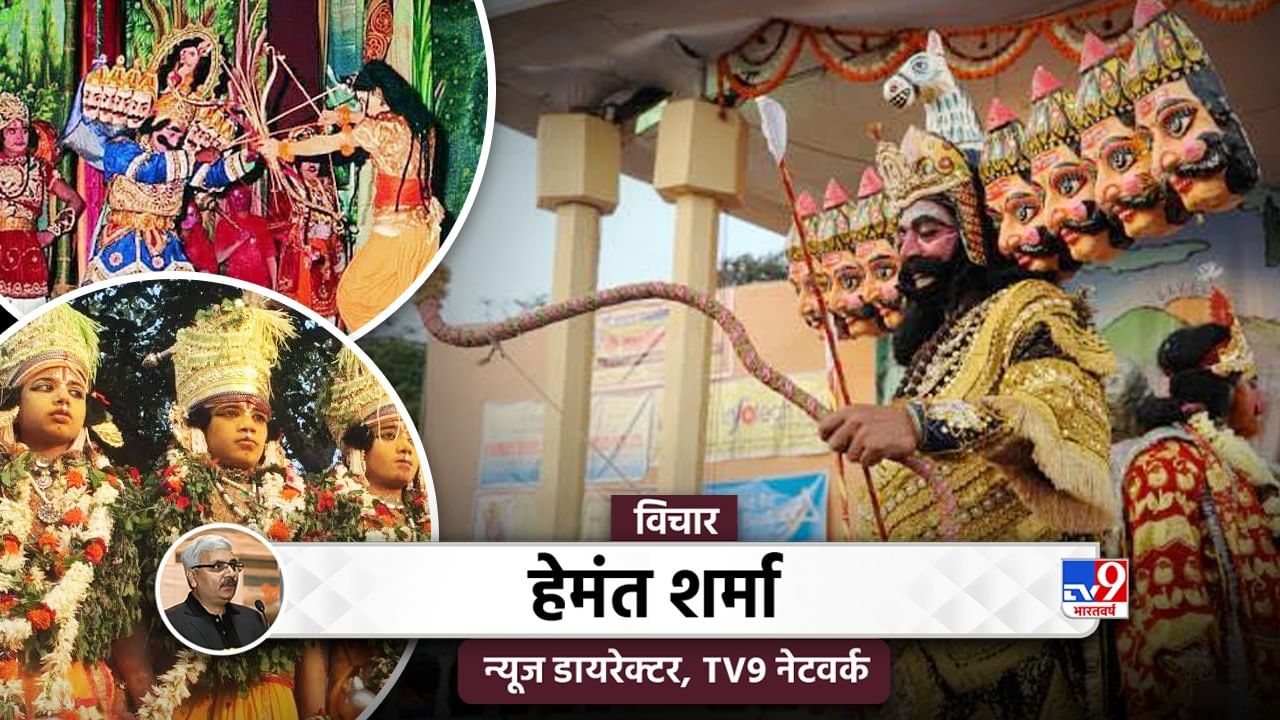

The onset of autumn, described by Tulsidas in the verse, “Varsha Vigat Sharad Ritu Aai. Lakshman Dekhu Param Suhai,” evokes a sense of joy. The atmosphere is filled with festivity, and Ramlila’s sounds fill the air, captivating hearts. While modern life constraints limit attendance, the spirit of Ramlila endures. The tradition of Kashi is deeply rooted, with Ramlilas holding immense power. They remain steadfast, irrespective of conditions.
The connection to Ramlila lies in the association with Ayodhya and Banaras, both vital locations. Ayodhya was the setting of Ram’s life during the Treta Yuga, while Tulsidas initiated Ramlila in Banaras in the 16th century to bring Ram’s story to the public. The understanding of Ram’s story from the Ramayana and Ramcharitmanas might be a matter of debate, but Ramlilas in North India undeniably brought the story to every home.
The exact beginning of Ramlilas in the country is unclear. However, when Goswami Tulsidas depicted Lord Ram’s character in Ramcharit Manas in the Awadhi language in 1500 AD, Ramlila began to be performed in North India. Goswami Tulsidas started Ramlilas on his Ramcharitmanas in Banaras. The main issue was how to market the book and reach it to the public. The scholars were unhappy with Tulsidas because he was using the language of the people rather than the language of Gods. With no access to modern media and limited handwritten copies, Tulsidas decided to adopt Ramlila as a way to make his work popular. He began narrating Ramkatha to the public and began performing Ramlilas throughout North India. Tulsidas’s idea succeeded. Ramlilas gained popularity. It is thought that Tulsidas’s goal was to make people feel that the oppressive Mughal rule would end, just like Ravana’s reign ended.
Megha Bhagat of Banaras is considered the father of Ramlila. Tulsidas started this by establishing Tulsi Akhada and staging Ramcharitmanas. He sought the assistance of his friend, Megha Bhagat. Megha Bhagat taught Sanskrit to children in the Kamachha area of Varanasi. He used to stage Ramlila based on Valmiki Ramayana, which was not very popular. Tulsidas asked Megha Bhagat to stage Ramlila based on Manas. Megha Bhagat did it. The Ramlila began gaining popularity. This story was also adopted by Amritlal Nagar in his novel Manas ka Hans, depicting the character of Megha Bhagat.
Megha Bhagat’s devotion inspired Tulsidas. Tulsidas considered him the father of Ramlila in Banaras. However, there is not much information about his personal life except that he was a friend and devotee of Goswami Tulsidas. The Ramlila that he started still happens every year and is known as the Ramlila of Nati Imli. Krishna Dutt Mishra, the author of Gautam Chandrika, mentioned Megha Bhagat-“Kamala Ke Megha Bhagat Kari Surdhuni Nahan. Tulsi Charan Pakhari Grih Bhajat Ram Dhanuban.”
Acharya Vishwanath Prasad Mishra wrote that a Ramlila in Varanasi is famous by the name of Ramlila Chitrakoot or Nati Imli Ramlila. It is believed that Ramlila used to be staged according to Valmiki Ramayana in the place of Chitrakoot in Varanasi. Later, Megha Bhagat started the Ramlila according to Tulsidas’s Ramcharitmanas.