
The Congress party has vehemently criticized the Modi government, alleging a systematic dilution of the Right to Information (RTI) Act’s effectiveness since 2014. This, they argue, has jeopardized national transparency and the integrity of democratic governance. The party’s core accusation is that the current administration has deliberately introduced amendments to restrict the public’s access to crucial information.
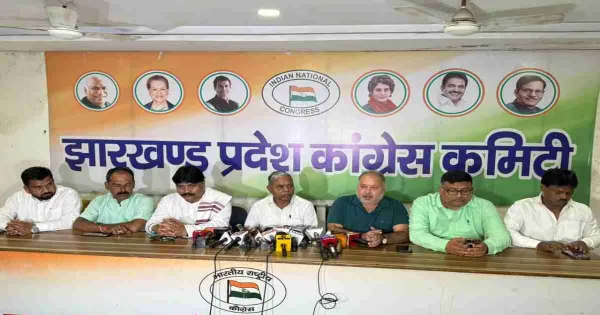
In a press conference held at the Congress headquarters, State Congress President Keshav Mahto Kamlesh elaborated on these concerns. He reiterated that the historic RTI Act was a product of the UPA government, established on October 12, 2005, under the guidance of Dr. Manmohan Singh and Sonia Gandhi. The act’s fundamental purpose was to ensure citizen access to information held by public bodies, thereby promoting transparency and accountability in governance.
Kamlesh specifically targeted the 2019 amendments, stating they have weakened the autonomy of information commissioners and increased executive control. He noted that the fixed five-year tenure and secure service conditions for Information Commissioners were altered, granting the central government the power to decide their terms. Furthermore, the Digital Personal Data Protection Act of 2023, he argued, has expanded the definition of personal information, making disclosures in the public interest more challenging. This move, the Congress believes, can be used to block access to information regarding public duties and the expenditure of public funds.
The party referenced past instances where the RTI Act proved instrumental in exposing significant issues, including financial mismanagement in MPLADS, fraudulent MGNREGA beneficiaries, and obscure political funding mechanisms. Concerns were also raised about the operational capacity of the Central Information Commission (CIC). With only two commissioners currently in office against 11 approved positions, the CIC faces a massive backlog of approximately 23,000 cases by November 2024. The Congress highlighted their unsuccessful attempts to obtain information on crucial matters such as the expenditure on the Prime Minister’s foreign trips, the precise number of fatalities due to oxygen scarcity during the COVID-19 pandemic, and the allocation and use of PM CARES Fund resources. Information regarding electoral bonds was also initially denied through RTI, only being disclosed following a Supreme Court mandate.
Additionally, the Congress pointed out the non-implementation of the Whistleblowers Protection Act, a key legislation passed by Parliament during the UPA’s tenure. They stated that the Modi government has failed to notify and enact this law since 2014.
As the RTI Act approaches its 20th anniversary, the Congress is demanding the reversal of the 2019 amendments, a thorough review and revision of Section 44(3) of the DPDP Act which curtails RTI objectives, the urgent filling of all vacant posts within the CIC, public declaration of the commission’s performance standards, the immediate implementation of the Whistleblowers Protection Act, and the inclusion of a diverse representation from fields like journalism, social work, academia, and women in the Information Commissions.