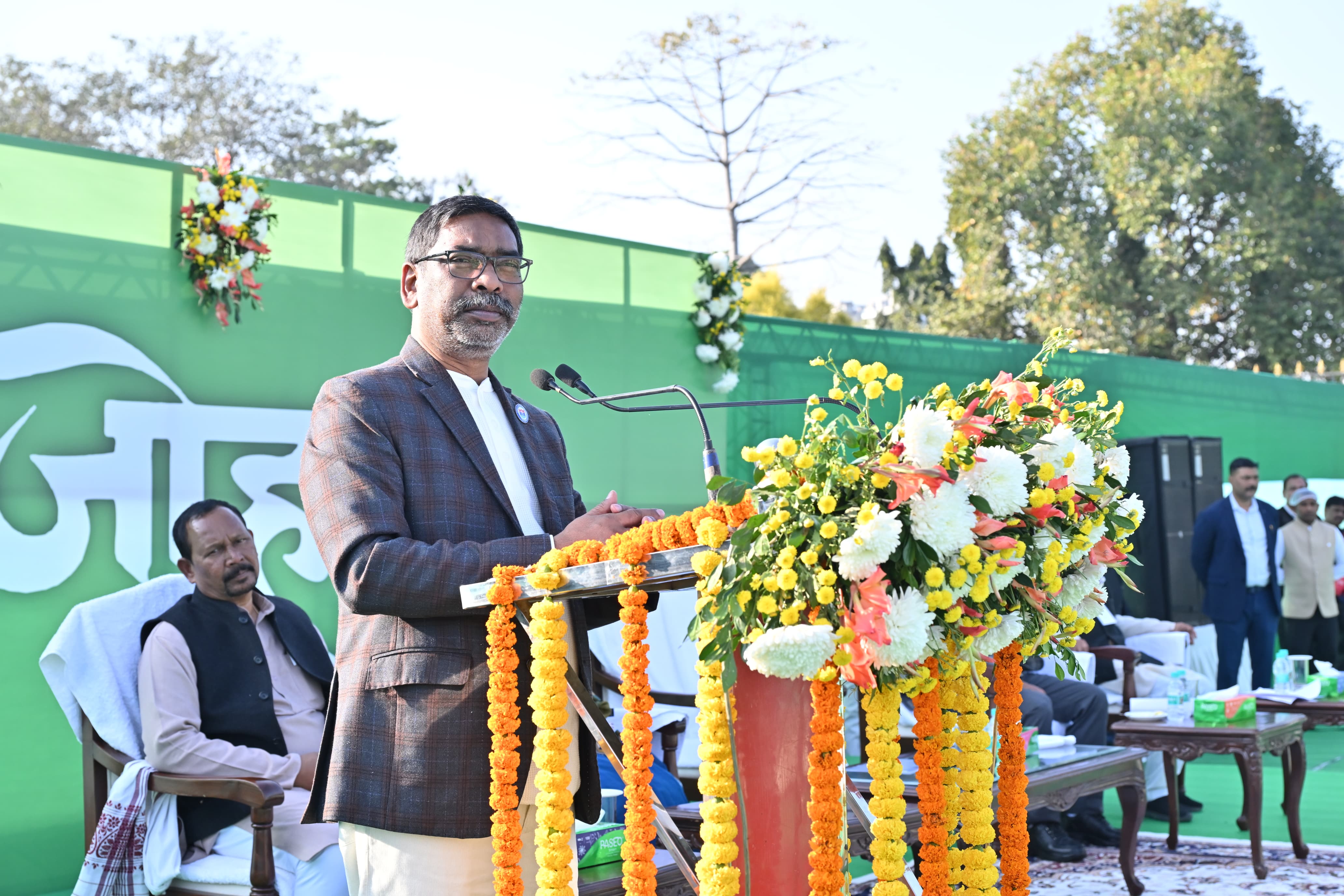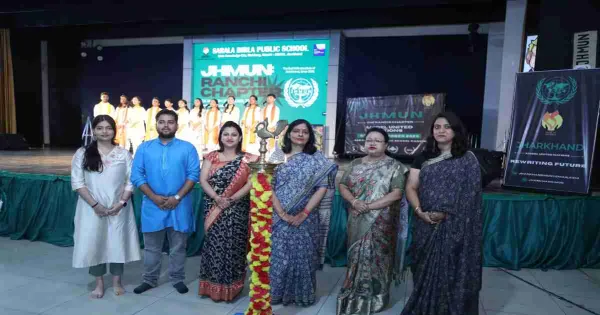

Ranchi: Sarla Birla Public School became the hub of youthful diplomacy as it hosted the Jharkhand Model United Nations 2025, a significant two-day event that commenced on Saturday. Fifty-five schools from across the state converged for this summit, designed to be a vibrant arena for developing crucial skills in diplomacy, leadership, and global understanding. The event officially launched with a traditional lamp-lighting ceremony.
Participants were guided through an orientation program that detailed parliamentary procedures, committee structures, and the nuances of debate. Following this, a series of ice-breaker activities, group discussions, and workshops aimed to build synergy and self-assurance among the delegates. The core of the event involved students actively engaging in debates, caucuses, and the critical task of drafting resolutions, all while representing diverse nations and dissecting paramount global and national issues.
A variety of simulated committees tackled complex topics. The World Trade Organization (WTO) committee delved into the surge of global trade conflicts and their consequences for the multilateral trading system. The United Nations Security Council (UNSC) debated the ethical and legal dimensions of unilateral military interventions conducted under the banner of humanitarian aid. The Lok Sabha simulation focused on an in-depth analysis of the Armed Forces Special Powers Act, 1958 (AFSPA), examining its impact on civil liberties, the rule of law, and the stability of Jammu & Kashmir and the Northeastern states.
Concurrently, the Jharkhand Legislative Assembly committee addressed the critical issue of illegal mining, referencing the Mines and Minerals (Development and Regulation) Act, 1957 (MMDR Act, 1957), alongside state-level regulations. The United Nations General Assembly (UNGA), despite reservations expressed by delegates from Palestine, Sudan, and the USA, worked towards bolstering international justice and enhancing the enforcement mechanisms of the International Criminal Court (ICC) and the International Court of Justice (ICJ). The All India Press and Publication Media (AIPPM) committee discussed the Broadcasting Services (Regulation) Bill 2023 and its potential influence on freedom of expression within India’s contemporary media landscape. The International Press Corps (IPC) committee explored regulatory frameworks for professional photography, journalism, and cartooning. The Indian Premier League (IPL) committee debated aspects of the IPC Mega Auctions 26.
Students representing Sarla Birla Public School excelled in demonstrating leadership, collaborative skills, and critical thinking, engaging effectively with students from all participating schools. They put forth inventive solutions to complex global challenges, filling the school with an atmosphere of vibrant intellectual exchange. This environment encouraged delegates to cultivate deep thinking, responsible action, and a truly global outlook.
Manisha Sharma, the school’s Principal, praised the dedication of the student organizers, delegates, and mentors. She highlighted that events like Model United Nations are pivotal in nurturing diplomacy, communication, and a global perspective. Extending a warm welcome to all participants and educators, she motivated students to engage actively, foster productive discussions, and develop innovative and practical solutions for global issues. She further emphasized that these experiences are crucial for developing essential traits such as diplomacy, critical analysis, leadership, and strong communication skills, preparing them to become catalysts for positive change in the future.