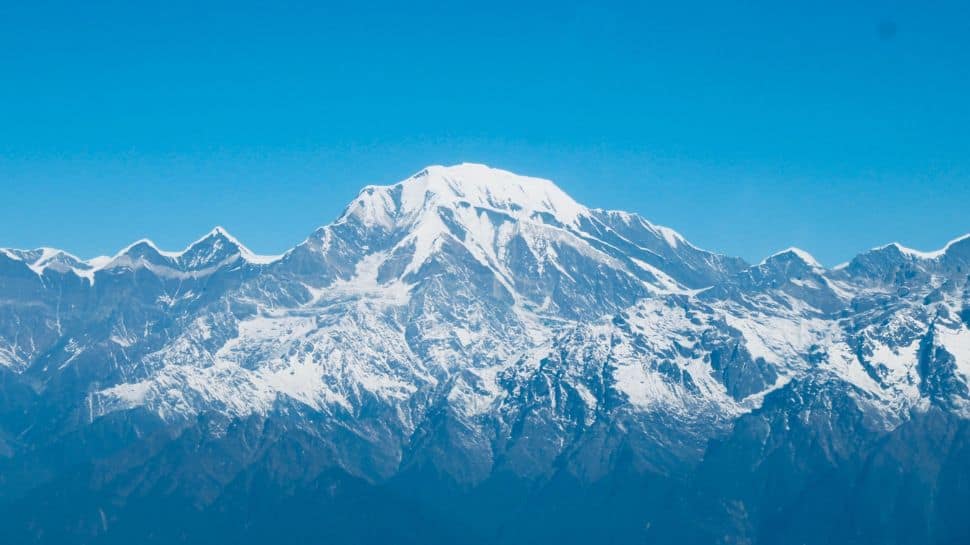

Kashmir is currently grappling with an intense cold wave, as temperatures have dropped significantly below freezing across the valley. This severe chill is largely due to a sustained dry spell and clear skies at night, leading to rapid heat loss. The harsh weather has disrupted everyday activities, prompting educational authorities to announce early winter vacations for schools. Health officials are also advising the public on necessary precautions.
The mercury continued its sharp descent across Jammu & Kashmir and Ladakh on Wednesday night, with almost all monitoring stations in the Valley and Ladakh recording substantial overnight temperature drops. Every location in Kashmir remained below the freezing point. Srinagar registered -4.4°C, while Shopian recorded one of the season’s lowest temperatures at -6.5°C. Pulwama and Baramulla followed at -5.8°C, Pampore at -5.5°C, and Anantnag at -5.7°C.
Srinagar Airport recorded a frigid -5.2°C, and Pahalgam reached -5.0°C. Other notable sub-zero temperatures were recorded in Budgam (-4.6°C), Bandipora (-4.5°C), Awantipora (-4.0°C), Sonamarg (-4.0°C), Ganderbal (-3.3°C), Qazigund (-4.0°C), and Kokernag (-1.6°C). Gulmarg recorded -1.0°C, and Kulgam -2.4°C.
In Ladakh, Leh registered -8.6°C, Kargil -9.5°C, and Nubra -7.7°C. The extreme cold was most evident at Zojila Pass, which registered a staggering -16.0°C.
In contrast, the plains of the Jammu region remained above freezing point, with Jammu city at 8.7°C and Katra at 8.5°C. However, higher regions experienced much colder conditions, with Banihal reporting -1.5°C and Bhaderwah at 0.4°C.
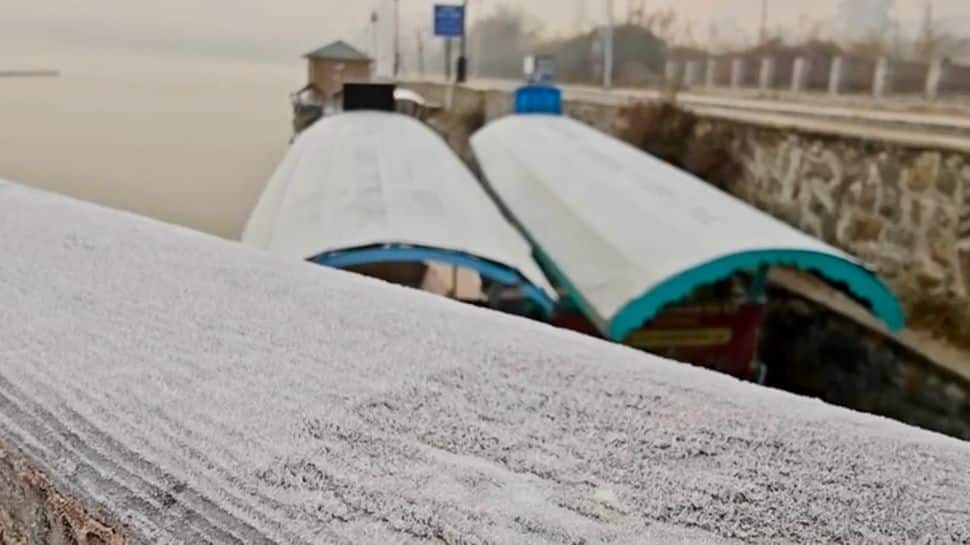
The continuous dry weather, devoid of significant snowfall or rainfall, has prevented the ground from retaining heat, thereby intensifying the cold. Reports are emerging of icicles forming on trees and a thick layer of ice blanketing roads and freezing parts of water bodies in the upper reaches of Kashmir and Ladakh.
The India Meteorological Department (IMD) predicts that the current dry and frigid conditions will persist for the next seven days. A change towards generally cloudy weather is possible around December 2-3, with a potential for rain and snow spells between December 6 and December 10, offering a possible break from the dry spell. Kashmir is still some time away from its harshest winter period, ‘Chillai-Kalan’, the 40-day period of extreme cold that begins on December 21.