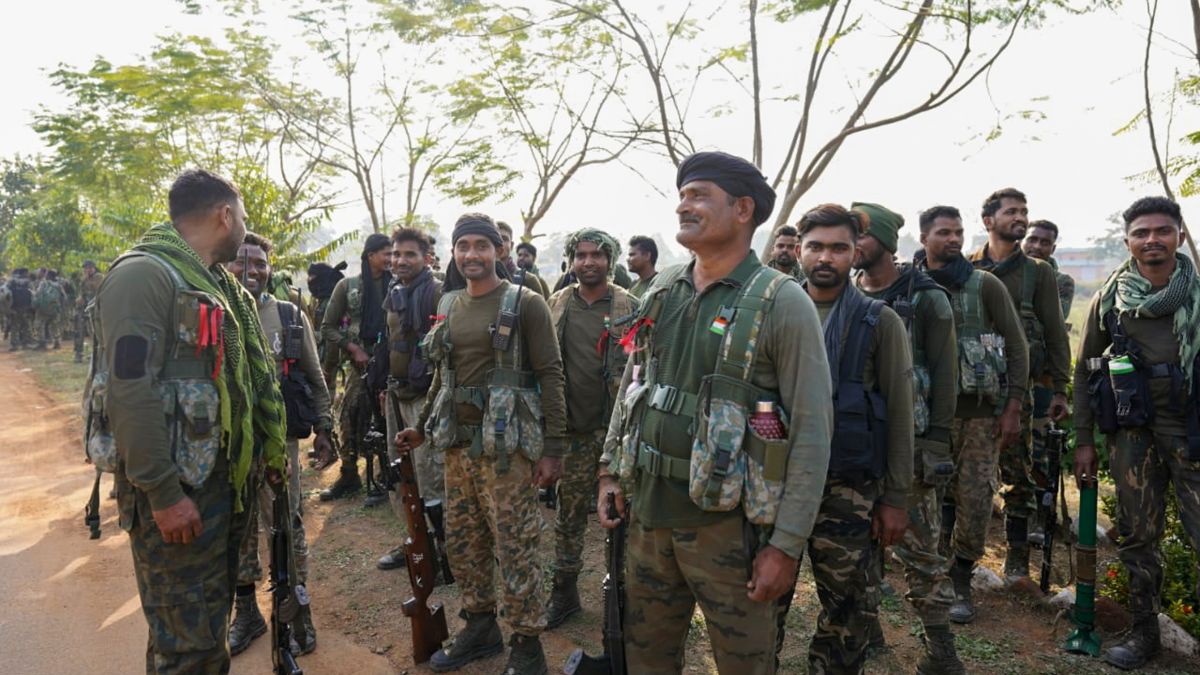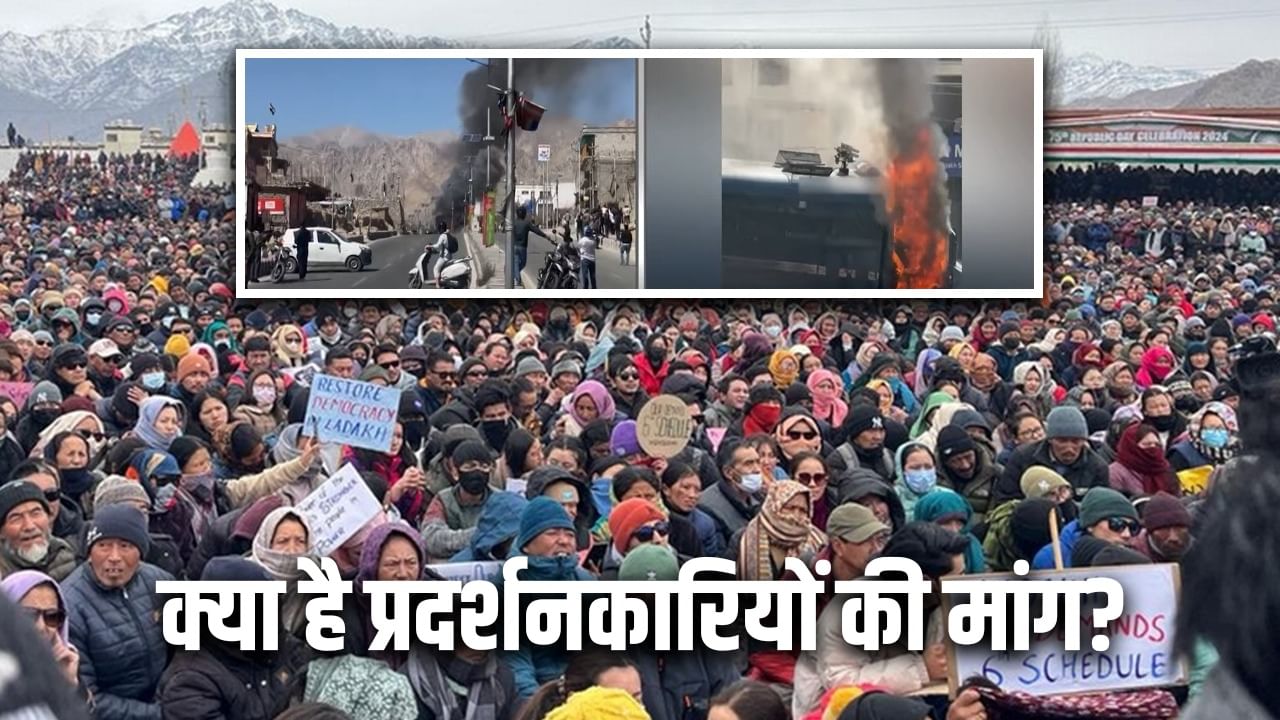

Leh, Ladakh, is witnessing escalating protests centered around the demands for full statehood and inclusion in the Sixth Schedule of the Constitution. These protests, which have been ongoing for the past fifteen days and are being led by climate activist Sonam Wangchuk, became violent on Wednesday. Students clashed with police, leading to the burning of a CRPF vehicle and the BJP office. The protesters are expressing their frustration with the central government, demanding that their requests are urgently addressed.
Ladakh was once part of Jammu and Kashmir. However, on August 5, 2019, it was reorganized and designated as a Union Territory. Now, the residents of Ladakh are seeking inclusion in the Sixth Schedule, which grants a degree of autonomy. This article examines the Sixth Schedule and explains its importance to the people of Ladakh.
The people of Ladakh initially welcomed the central government’s decision, anticipating that being a Union Territory would accelerate development. However, their hopes began to fade, as they became reliant on the central government for almost everything, with the Lieutenant Governor and an MP as their primary means of communication. This led to a sense of unity and the start of protests to claim their rights.
The Sixth Schedule will provide Ladakh with a distinct form of autonomy, outlined in Articles 244(2) and 275(1) of the Constitution. This provides special rights. Ladakh previously held these rights when it was part of the state of Jammu and Kashmir.
This special arrangement is in place in several northeastern states, including Assam, Tripura, Meghalaya, and Mizoram. This arrangement permits these states to have their own administration. Its implementation leads to the formation of autonomous districts for efficient governance. Each district typically has 30 members, with a portion nominated by the Governor, and the remainder elected by the local population. Substantial decisions within these districts must be approved by the district panchayat. This requires the central government to grant these rights under the Constitution.
Following the conversion to a Union Territory, Ladakh no longer has elected MLAs. Previously, four MLAs represented Ladakh in the Jammu and Kashmir Assembly. This absence of representation is a significant concern for the public. The protesters feel they do not have an effective means to communicate their concerns to the government, and the government’s promises remain unfulfilled.
The new system has led to a crisis in government jobs. Ladakh formerly benefitted from recruitment via the Jammu and Kashmir Public Service Commission. Protesters assert that in the past five years, no gazetted positions have been filled from Ladakh. While there have been reports of some non-gazetted appointments. Unemployment has increased in Ladakh. Many educated individuals are forced into small businesses, facing struggles and closures.
If the government accedes to the protesters’ demands, significant changes are anticipated. These demands involve granting full statehood, enabling the people of Ladakh to advocate for their rights, and establishing separate parliamentary constituencies for Leh and Kargil. The district council would gain wide-ranging powers, including control over land, water, forests, agriculture, village councils, health, and police. This committee would also have the authority to create rules and regulations. These changes would be highly advantageous for Ladakh, providing local control over the region’s development and future.
Ladakhi leaders argue that if Sikkim and Mizoram can be granted statehood, Ladakh should be granted the same. They note that Sikkim’s population in 1975 was around 200,000, and its area was 7,000 square kilometers. Ladakh has a population of over 300,000, and an area exceeding 60,000 square kilometers. Strategically, Ladakh is of greater importance than Sikkim.