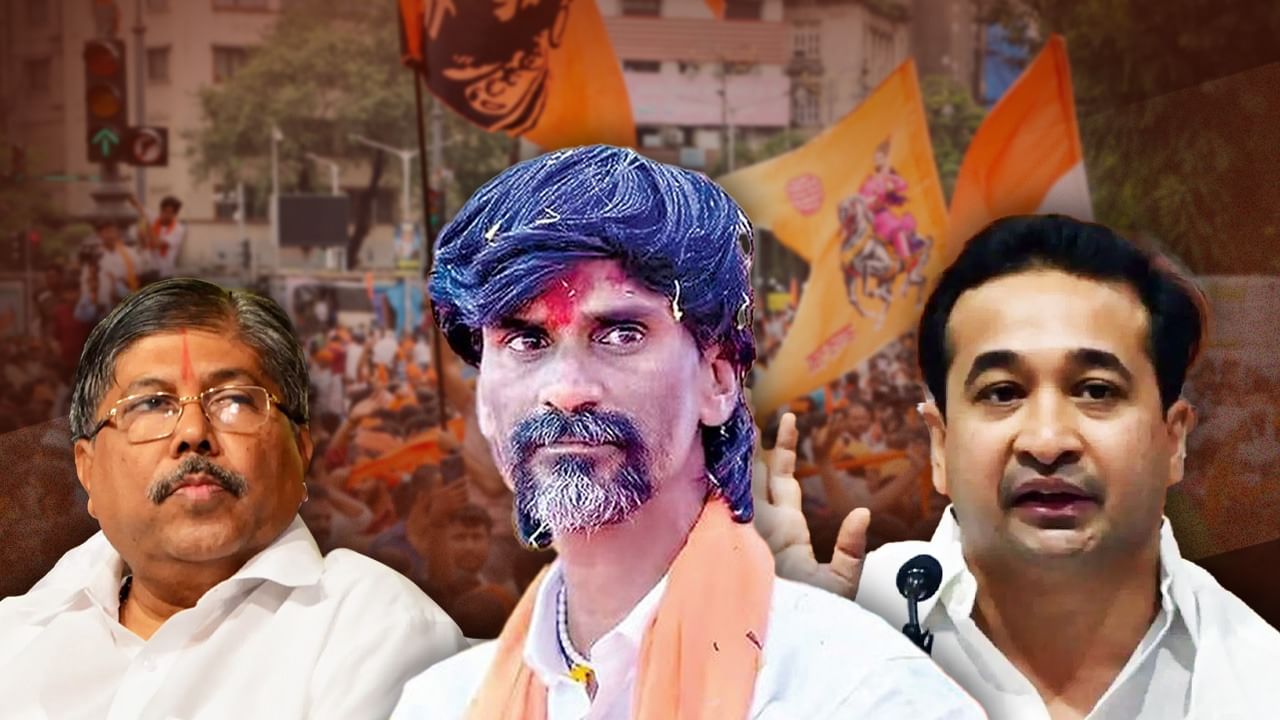

The debate surrounding Maratha reservation in Maharashtra is intensifying, with Manoj Jarange Patil’s hunger strike gaining momentum. He has declared a water fast starting September 1st. Government officials Chandrakant Patil and Nitesh Rane are suggesting that the Maratha community should utilize the existing EWS quota, rather than pushing for inclusion in the OBC category. Expanding the EWS quota is another option being considered. Nitesh Rane has accused NCP (SP) MLA Rohit Pawar of financing Jarange’s protests, while BJP leader Keshav Upadhyay has accused some factions within the opposition MVA of using the Maratha reservation issue to divide and rule. Manoj Jarange Patil has been on a hunger strike at Azad Maidan in Mumbai since Friday, seeking a 10% reservation for Marathas and Kunbi status (a recognized OBC group) to qualify for reservation in education and government jobs. This demand is contested by OBC leaders. Nitesh Rane has asserted that Jarange’s demand for OBC inclusion won’t be met, and the government might consider it if the demand is restricted to Marathwada. He highlighted the separate identities of Marathas and Kunbis in Konkan. Rane stated that the state government has already implemented a law, providing a 10% reservation through the Economically Weaker Sections (EWS) for education and government jobs, along with additional financial aid. Discussions can be held with the government if there’s a need to expand this reservation. Chandrakant Patil stated that Marathas have not suffered from untouchability and are not caste-based backward, but economic hardships have arisen from decreasing landholdings. He explained that the lack of agricultural income and the inability of families to afford higher education for their children are the key issues. They are thus seeking reservations in education and employment. The central government’s EWS reservation, which has been upheld by the Supreme Court, provides a potential solution. The EWS, or Economically Weaker Section, was introduced by the central government in 2019 to provide reservation benefits in education and government jobs for individuals from the general category based on economic criteria. The 103rd Amendment to the Constitution facilitated this. Only families with an annual income less than ₹8 lakh are eligible.