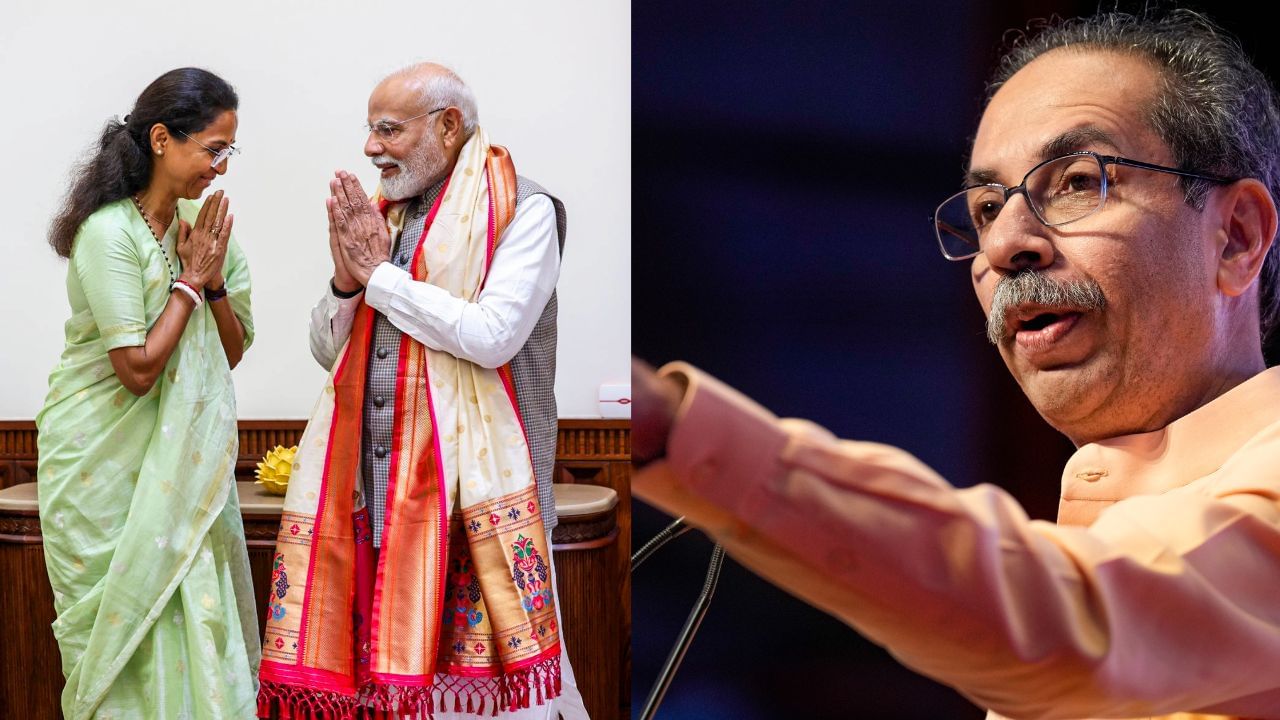

The political dynamics in Maharashtra are undergoing a period of upheaval. Several crucial political events transpired in Delhi within a single day, leading to extensive examination of their political significance. Uddhav Thackeray, a prominent figure in the Maha Vikas Aghadi coalition and leader of Shiv Sena (UBT), participated in the India alliance meeting in Delhi and delivered a strong criticism of the central government. In parallel, Supriya Sule, a senior leader from the Nationalist Congress (Sharad Pawar faction), a key ally, met with Prime Minister Narendra Modi on the same day. The timing of Supriya Sule’s meeting with the Prime Minister is generating considerable discussion in Delhi’s political landscape, especially given that she was originally expected to be present at the India alliance meeting organized by Rahul Gandhi. Instead, she met with the PM in the afternoon, a move that analysts are interpreting as a “symbolic strategy.” Notably, Supriya Sule also attended Rahul Gandhi’s dinner gathering. Furthermore, Priyanka Chaturvedi, a Rajya Sabha MP from Uddhav Thackeray’s party, undertook a courtesy visit to the Prime Minister. While this was officially presented as a formal meeting, its context and timing have fueled speculation. Concurrent with these developments, Maharashtra’s Deputy Chief Minister, Eknath Shinde, was also in Delhi. He met with the Prime Minister, accompanied by his family, and also engaged in a dedicated conversation with Union Home Minister Amit Shah in front of all members of Parliament. Sources suggest that Shinde also expressed concerns about the “political instability” in the state during this meeting. Reports of growing differences between Shinde and Chief Minister Devendra Fadnavis have been prevalent in recent times. Thus, Shinde’s visit to Delhi, including the family visit to the Prime Minister, has prompted a series of questions in political circles. Additionally, Supriya Sule of the Nationalist Congress (Sharad Pawar faction) has previously demonstrated a more conciliatory stance towards the central government. She expressed empathy toward the center following the Pahalgam terror attack. Sharad Pawar himself has, on several occasions, appeared to provide indirect cooperation to the central government. With Uddhav Thackeray openly criticizing the central government and Supriya Sule meeting with the Prime Minister, the question of whether the Maha Vikas Aghadi is still unified becomes relevant. The India alliance is also experiencing internal ripples as a result of these events. Sources suggest that certain leaders have privately expressed discontent over the timing of these meetings. Political observers believe that the cohesion of the Maha Vikas Aghadi in Maharashtra is now under strain. The simultaneous events – Uddhav Thackeray’s criticism of the center, Supriya Sule’s meeting with the PM, Shinde’s family visit, and Priyanka Chaturvedi’s courtesy visit – suggest that Maharashtra’s political scene may be more turbulent than it seems. The central question remains: Is the Maha Vikas Aghadi truly united? Or are new political alliances forming, poised to reshape the electoral landscape in the upcoming elections?