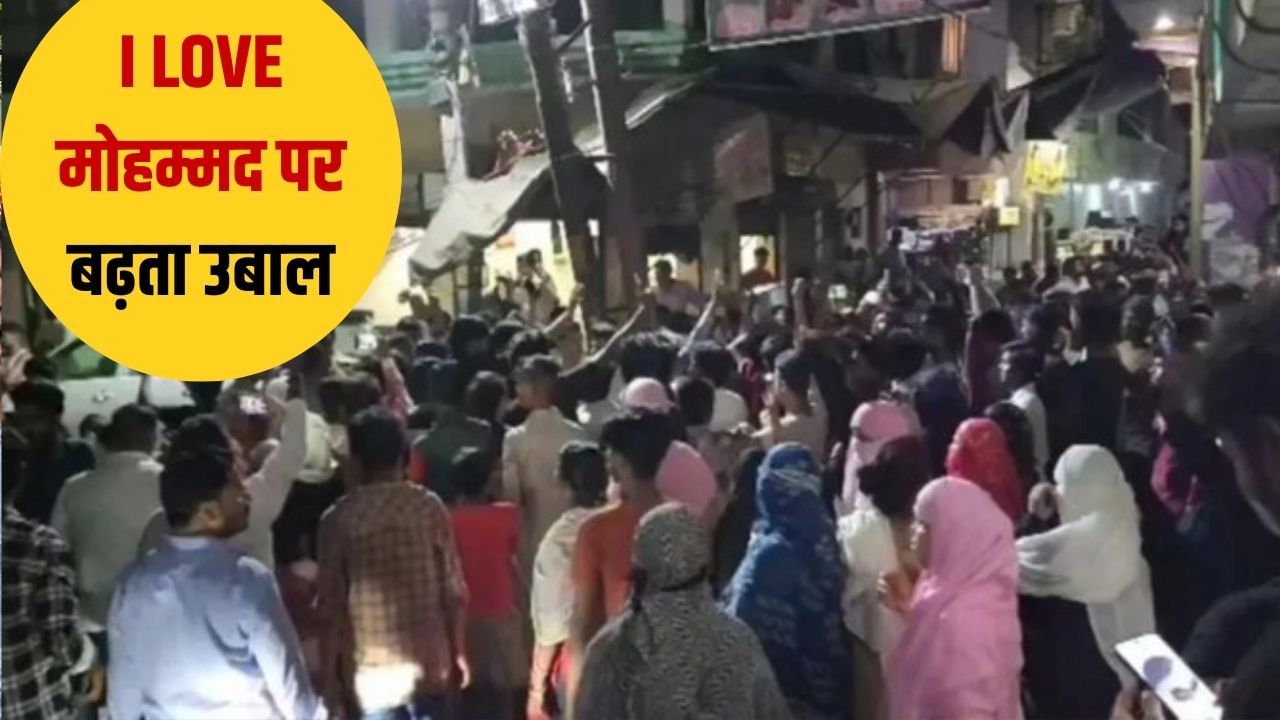

The ‘I LOVE MOHAMMAD’ controversy, originating in Kanpur, has ignited protests and unrest across several Indian cities. Disturbing visuals from various locations depict the Muslim community’s anger and their expression of solidarity with the slogan. Cities such as Lucknow, Kanpur, Kashipur, Latur, Hyderabad, and Godhra (Gujarat) have witnessed demonstrations where clashes with law enforcement and acts of vandalism have occurred.
The genesis of the conflict lies in Kanpur, UP, where a poster bearing the message ‘I LOVE MOHAMMAD’ was displayed on September 4th. This led to objections from Hindu organizations and subsequent police action against 25 individuals, triggering widespread protests from the Muslim community. This raises questions about the potential for organized actions.
The rapid spread of the dispute is evident in the incidents from Kashipur, Uttarakhand. An unauthorized procession in Kashipur caused a volatile situation, resulting in stone-pelting, property damage, and attacks on police personnel. The procession of ‘I Love Mohammad’ banner-carrying individuals, lacked prior administrative and police approval. The escalating tensions quickly led to physical confrontations.
Authorities estimate a crowd of 400-500 participants in the Kashipur procession, with provocative speeches being delivered. Police intervention led to attacks against law enforcement and damage to government vehicles, followed by governmental action on encroachments.
In Latur, Maharashtra, a large rally was organized by the Muslim community, chanting the ‘I Love Mohammad’ slogan. The procession from Azamganj Golai to Town Hall saw thousands of participants, with anti-government slogans also being raised. Despite robust security measures, tensions rose due to the slogans.
Unnao, Uttar Pradesh, also experienced a demonstration. The protest included religious slogans, leading to clashes between protesters and police. The use of the ‘Sar Tan Se Juda’ slogan further escalated the situation, leading to a police lathi charge. The incident resulted in arrests and prompted meetings between community leaders and law enforcement. The city Qazi urged adherence to legal boundaries.
The dispute involves three primary viewpoints:
* Muslim Community: ‘I love Mohammad…It’s our faith, not a crime.’
* Hindu Community: ‘Banners were used to provoke.’
* Police: ‘Public spaces require permission for gatherings.’
The situation has also become politicized. AIMIM President Asaduddin Owaisi questioned the legality of expressing ‘I LOVE MOHAMMAD,’ and Nagina MP Chandrashekhar Azad raised concerns about the right to religious freedom.