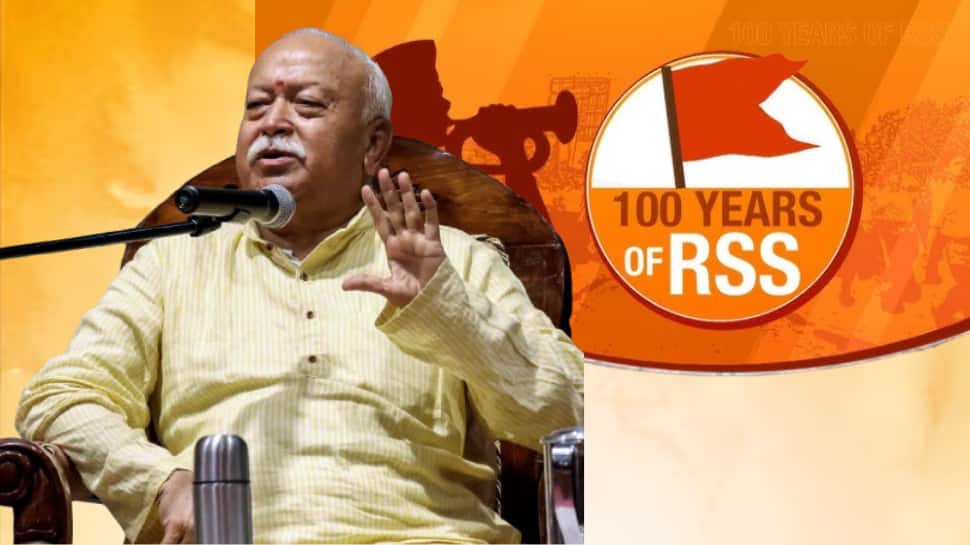

Rashtriya Swayamsevak Sangh (RSS) Sarsanghchalak Mohan Bhagwat has extended an open invitation to all communities, including Muslims and Christians, to be part of the organization. Bhagwat’s remarks were made at the launch of a two-day lecture series, ‘100 Years of Sangh Journey: New Horizons,’ at PES University Auditorium in Bengaluru, signaling the commencement of the RSS’s 100th-anniversary commemorations.
Delving into the RSS’s history, Bhagwat explained that the organization was founded in 1925 to address national fragmentation and societal divisions. He highlighted India’s past challenges and the pivotal role of Hindus in preserving the nation’s distinct cultural identity and ancient values. Bhagwat reiterated the RSS’s non-political nature, emphasizing its dedication to strengthening society and advocating for national interests without formal political ties. He also stressed the importance of individual responsibility in fostering societal discipline and mutual respect.
Addressing the question of why the RSS is not a registered entity, Bhagwat recounted its origins during the British Raj, stating that registration was not considered necessary at the time. He defended the organization’s legal legitimacy, noting that court rulings have overturned all three bans imposed on the RSS since India’s independence, confirming its legal status. Bhagwat maintained that operating within the Indian Constitution is sufficient, eliminating the need for external registration, much like un-registered spiritual traditions.
Bhagwat unequivocally stated that the RSS welcomes everyone who identifies as a child of ‘Bharat Mata.’ He clarified that participation in RSS ‘shakhas’ is open to people of all religions, including Muslims and Christians, encouraging them to join with a spirit of unity. The central objective, Bhagwat articulated, is to cultivate a strong and organized Hindu society capable of building a prosperous and self-reliant India. This empowered society, he added, would then contribute to global peace and happiness through the dissemination of Dharma. The Sangh, he concluded, will have fulfilled its purpose once this vision is realized.