
India’s defense planners are closely observing the evolution of Russian air defense systems, particularly the potential addition of the S-500 ‘Prometheus’ to complement the already deployed S-400. This strategic consideration aims to elevate India’s airspace security to unprecedented levels, offering protection against the most advanced and emerging aerial threats.
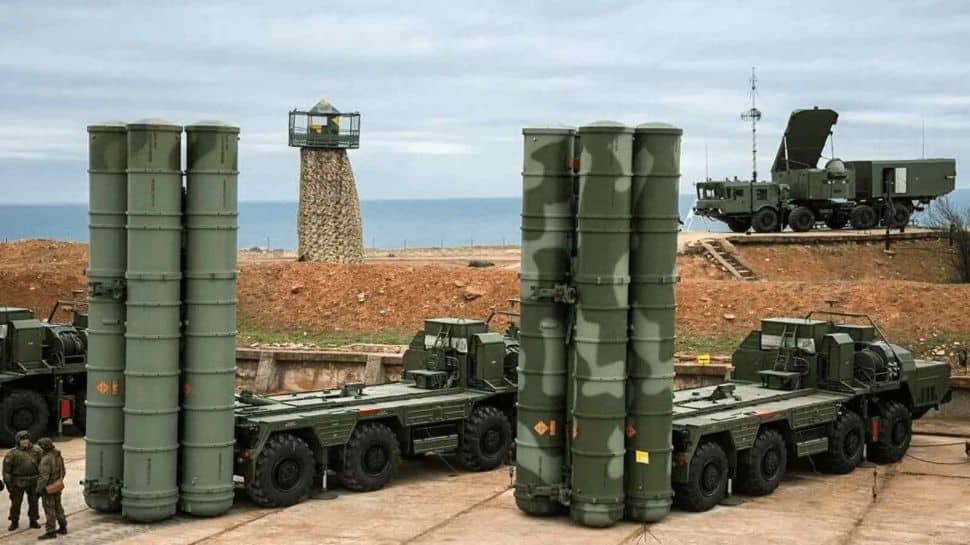
The S-400, a cornerstone of India’s air defense since its procurement in 2018, provides a potent multi-layered defense. It is adept at intercepting a wide range of targets, including aircraft, cruise missiles, and tactical ballistic missiles, creating a protective umbrella over critical zones. Analysts confirm the S-400’s strong regional air defense capabilities, citing its proven performance.
The S-500 represents a significant technological advancement, designed to counter threats that operate at the edge of current defense capabilities. It is specifically engineered to engage faster and higher-flying targets, such as hypersonic glide vehicles and advanced ballistic missiles. A notable capability attributed to the S-500 is its potential to intercept objects in low-earth orbit, a domain previously beyond the reach of most air defense systems. This could provide India with a strategic advantage in near-space defense.
Reportedly, S-500 interceptors boast extended ranges of 500-600 kilometers and can reach altitudes of tens to over a hundred kilometers, positioning it as a superior counter-ballistic and anti-hypersonic system. It is designed to work synergistically with the S-400, creating a comprehensive defense network. While the S-400 focuses on tactical and regional threats, the S-500 addresses strategic, high-speed, and high-altitude challenges.
Advanced sensor and battle management systems are crucial to the effectiveness of these platforms. The S-400 utilizes sophisticated radars for comprehensive situational awareness. The S-500 elevates this with next-generation sensors offering enhanced speed, accuracy, and tracking capabilities for high-velocity targets. This allows for rapid engagement of multiple threats simultaneously. Furthermore, the S-500 introduces ‘hit-to-kill’ technology for its interceptors, a necessary evolution for neutralizing extremely fast targets that can withstand proximity warhead detonations, unlike the S-400’s primary reliance on proximity fuses.
While the S-400 is fully operational in India, the S-500 is still in limited service with Russia. Any potential acquisition by India would be a significant geopolitical and strategic decision. The integration of the S-500 would not only enhance India’s defense against contemporary threats but also prepare it for future challenges in the near-space domain, reinforcing its role as a leading defense power.