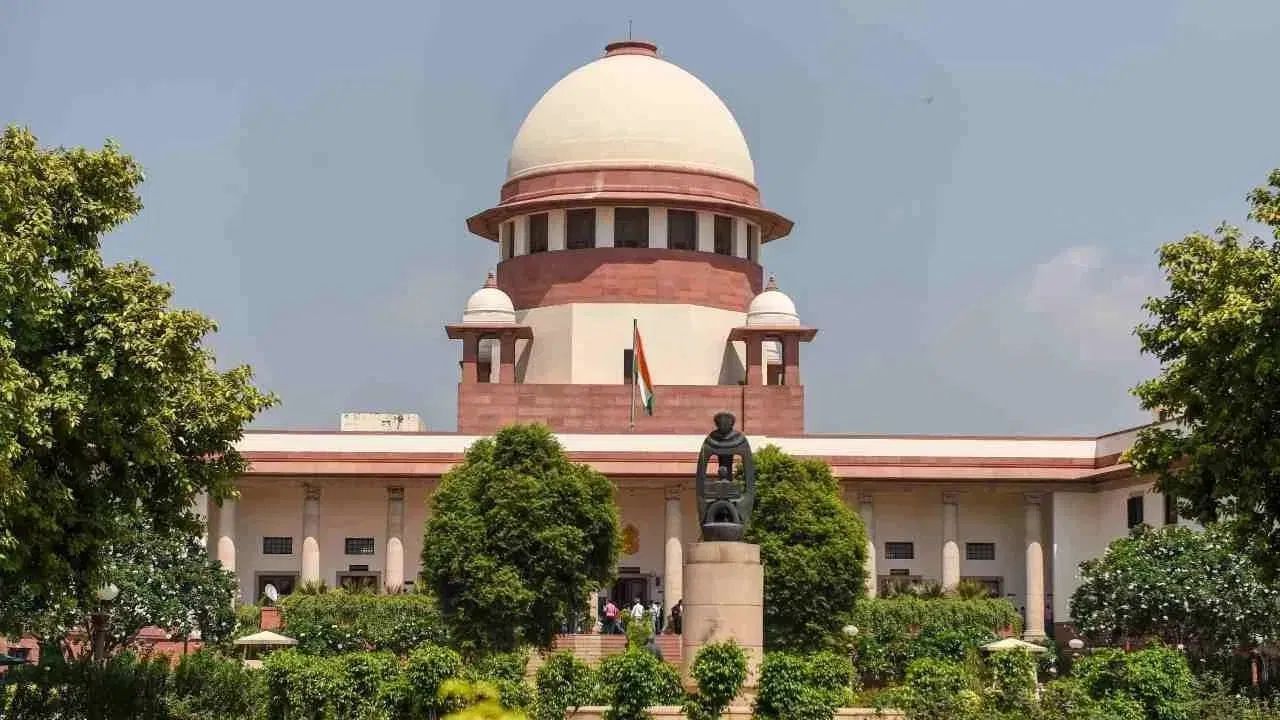

Reports of conflict between Governors and state governments have frequently surfaced, with instances reported in West Bengal, Tamil Nadu, Karnataka, Punjab, and Delhi. The Supreme Court is currently hearing a Presidential Reference on this issue. The central government has presented its response for the first time in this dispute. The Chief Justice noted that the Constitution’s creators aimed for a cooperative relationship between Governors and state governments.
On the tenth day of the Supreme Court hearing, the central government outlined the Governor’s powers regarding bills, stating that Governors can prevent unconstitutional bills and send them back for reconsideration. Solicitor General Tushar Mehta, countering Punjab’s arguments, clarified that Governors have discretionary authority beyond simply approving a bill.
The central government detailed how Governors order reconsideration. Solicitor General Tushar Mehta clarified that when returning a bill for reconsideration, the Governor also formally declares that consent is not being given. The Governor’s message, accompanying the returned bill under Article 200, Clause 1, will define the scope of reconsideration.
Solicitor General Tushar Mehta also clarified that bills reconsidered and returned to the Governor for approval within the same year will retain their original bill number. However, if the legislature reconsiders the bill in the following year, the bill number will be different.
The central government refuted Punjab’s argument. The central government said the Governor has no discretion except to invalidate a bill. The SG contested Punjab government lawyer Arvind Datar’s argument. He stated that even if a bill is invalid, the Governor cannot act outside the authority to approve it. The SG provided examples.
The center told the court that Governors can block bills that are explicitly unconstitutional. SG Tushar Mehta, representing the center, stated that the court must consider potentially extreme and dangerous future situations when interpreting constitutional provisions under sections 200 and 201, and thus must adopt a careful approach.
The Center: Governor is part of the legislature. The claim by opposition states that the powers of consent are executive in nature is fundamentally incorrect. Solicitor General Tushar Mehta added that the Governor’s consent is part of the legislative process. Consent is semi-legislative or self-specific in nature.
The claim by opposition states that the powers of consent are executive in nature is fundamentally wrong. However, the executive can assist in the creation of a bill, which can be presented before the legislature. Once the process is complete, the process is legislative in nature until consent is granted. This is why the governor is considered a part of the legislature.
Chief Justice’s perspective on the matter: CJI B.R. Gavai said that the framers of the constitution envisioned a harmonious environment when considering the position of Governors. CJI B.R. Gavai added that provincial governments (now states) were typically involved in appointing Governors.
Understanding Presidential References: The Indian Constitution grants the President significant powers, enabling direct orders to state and central governments, bypassing the Supreme Court. Article 143 of the Constitution addresses Presidential References. It differs from the standard process. If the President deems an issue legally or publicly necessary, they can seek the Supreme Court’s counsel on any law or constitutional issue.
The Presidential Reference was initiated after the Supreme Court’s April 8 ruling on the Tamil Nadu Governor case, which held that a Governor couldn’t indefinitely withhold bills.