

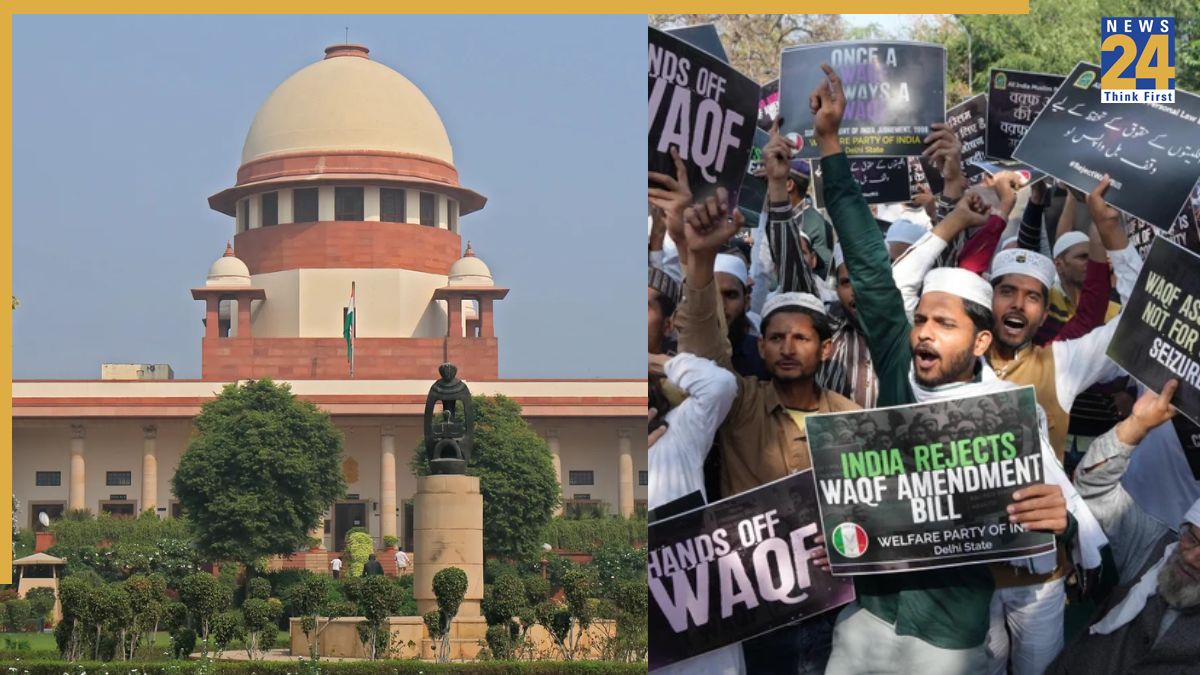

The Supreme Court has intervened in the Waqf Amendment Act, imposing a partial stay on its implementation. The court has suspended certain key provisions, including the requirement that an individual must be a practicing Muslim for five years to establish a Waqf. Additionally, the court has limited the number of non-Muslim members permitted on the Waqf board, setting a maximum of three individual members and a total of four. The court’s order stipulates that the provision concerning eligibility to create a Waqf will remain inactive until the formulation of rules for verifying Islamic practice. Another provision stayed by the court is the one that allowed a Collector to determine whether a Waqf-designated property is government-owned and to issue relevant orders. Chief Justice of India Justice BR Gavai underscored the judiciary’s position that Collectors should not have the authority to rule on individual rights, citing the importance of the separation of powers. Advocate Anas Tanweer, who contested the Waqf Act, highlighted that the Supreme Court found a preliminary basis to stay some provisions. The court has not suspended the entire Act but has targeted specific sections, such as the five-year Muslim practice rule, given the lack of a mechanism for verification. Congress MP Imran Pratapgarhi praised the decision, viewing it as a safeguard against potential government actions and providing reassurance to land donors. The Waqf (Amendment) Bill, 2025, received Presidential approval on April 5, following parliamentary debate. The Central government previously opposed the stay, arguing that constitutional courts usually do not impede statutory provisions but issue final verdicts. The government maintained that the amendments were directed at the secular management of properties and did not encroach upon religious freedoms. Solicitor General Tushar Mehta, representing the Centre, pointed out that it was the 2013 amendment that granted such rights to non-Muslims, and the 1923 law had prohibited them from creating Waqfs because of concerns about potential financial fraud.