
The Supreme Court issued an interim order on September 15th regarding the petitions challenging the Waqf (Amendment) Act. The court chose not to impose a stay on the entire law but did put a temporary hold on three of its sections. A two-judge bench headed by Chief Justice B.R. Gavai stated that although a complete repeal of the law wasn’t deemed necessary, certain parts of the new law required legal safeguards. The court had reserved its decision following detailed hearings on May 22nd.
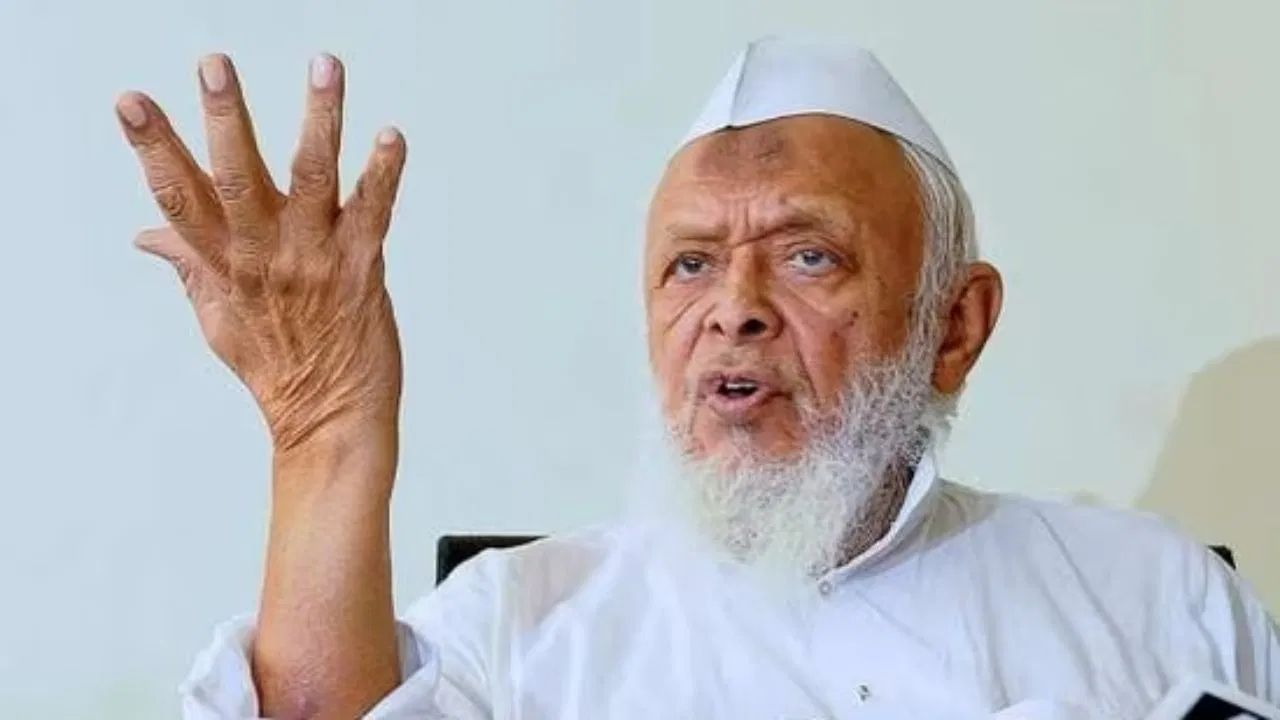
In response, Maulana Arshad Madani, the President of Jamiat Ulema-e-Hind, welcomed the court’s decision and expressed his gratitude. He noted that the court had taken cognizance of the concerns and serious anxieties voiced by Muslims nationwide regarding specific sections of the new law, resulting in the interim stay on those three sections.
Maulana Madani emphasized that their struggle continues. Jamiat Ulema-e-Hind will persist in its legal and democratic efforts until the law is repealed. He characterized the new Waqf law as a direct violation of the Indian constitution, which guarantees not only equal rights to citizens and minorities but also complete religious freedom.
He added that the law represents a dangerous, unconstitutional conspiracy to deprive Muslims of their religious freedom. Therefore, Jamiat Ulema-e-Hind challenged the Waqf Act 2025 in the Supreme Court. He expressed confidence that the Supreme Court will deliver constitutional justice by repealing this law.
Maulana Madani also thanked his legal team, especially Senior Advocate Kapil Sibal, and credited their effective arguments for convincing the court that the amendments in the Waqf law are detrimental to Waqf properties, unconstitutional, and gravely damaging to the religious freedom of Muslims.
The court granted a stay on certain provisions. The new law had stipulated that only individuals who had practiced Islam for the past five years could establish a Waqf. The court suspended this provision, stating it would not be enforced until state governments establish a process.
The new law placed all powers in the hands of the District Collector, giving the collector the ultimate authority to determine the status of disputed Waqf properties. The court also stayed this provision, stating that no interference would occur with disputed Waqf property until a tribunal or court decision was made. The court further ruled that no party could transfer rights to a third party until the dispute was resolved. The court clarified that the Commissioner could not be empowered to determine property ownership.
The court also clarified that the Central Waqf Council would have no more than four non-Muslim members and State Waqf Boards no more than three non-Muslim members. Although the court did not block the appointment of non-Muslim CEOs to the State Waqf Boards, it emphasized that Muslim CEOs should be appointed whenever feasible. The court did not intervene regarding registration requirements, noting that Waqf properties have historically been registered.
Chief Justice B.R. Gavai read the judgment, explaining that the court can only stay or repeal a law in exceptional circumstances. He noted that although the entire law was challenged, specific sections were of particular significance.
The central government agreed that no Waqf property, including those designated by use, declared through notification or registration, would be de-notified or have their status altered.