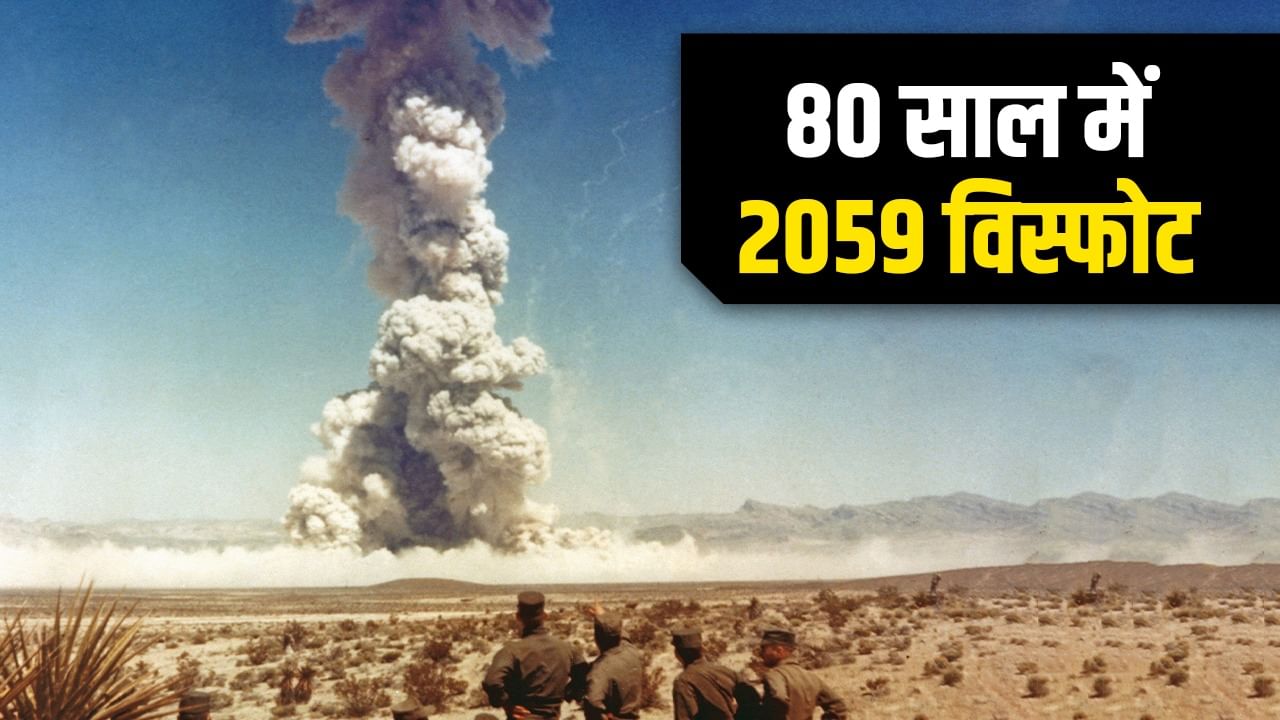

The detonation of a nuclear bomb can cause widespread destruction, as seen in the tragic events of Hiroshima and Nagasaki in 1945. Since then, the world has seen 2059 nuclear explosions.
The United States leads in the number of tests, followed by Kazakhstan and France. India has conducted nuclear tests on three occasions, and Pakistan on two.
The driving force behind these tests was the global effort to create nuclear weapons and the necessity to conduct test programs. The United States performed a large number of tests between 1945 and 1996 and currently has a large number of nuclear weapons.
Russia, too, participated extensively in nuclear testing, primarily in Kazakhstan. France, China, the United Kingdom, and North Korea have also been involved.
The number of nuclear weapons varies. China has a sizable stockpile, with India, Pakistan, and North Korea holding a smaller number.
Testing sites were widespread. The United States used locations in Nevada, the Marshall Islands, and the Pacific Ocean. Russia used Kazakhstan and the Arctic Ocean. The United Kingdom tested in Australia and the Pacific Ocean. France tested in Algeria and French Polynesia, and China in Lop Nur.
India tested in Pokhran and Pakistan tested in Balochistan. North Korea tested on an island adjacent to China.
The impacts of these tests have long-term effects. Many tests occurred in water or sand. Kazakhstan is dealing with the consequences of tests, with a large number of people seeking compensation due to the damage to their health.
The United States has relocated citizens of the Marshall Islands, but many continue to suffer. France has apologized to Algeria for the effects of its tests. The effects of these explosions are also impacting climate change.