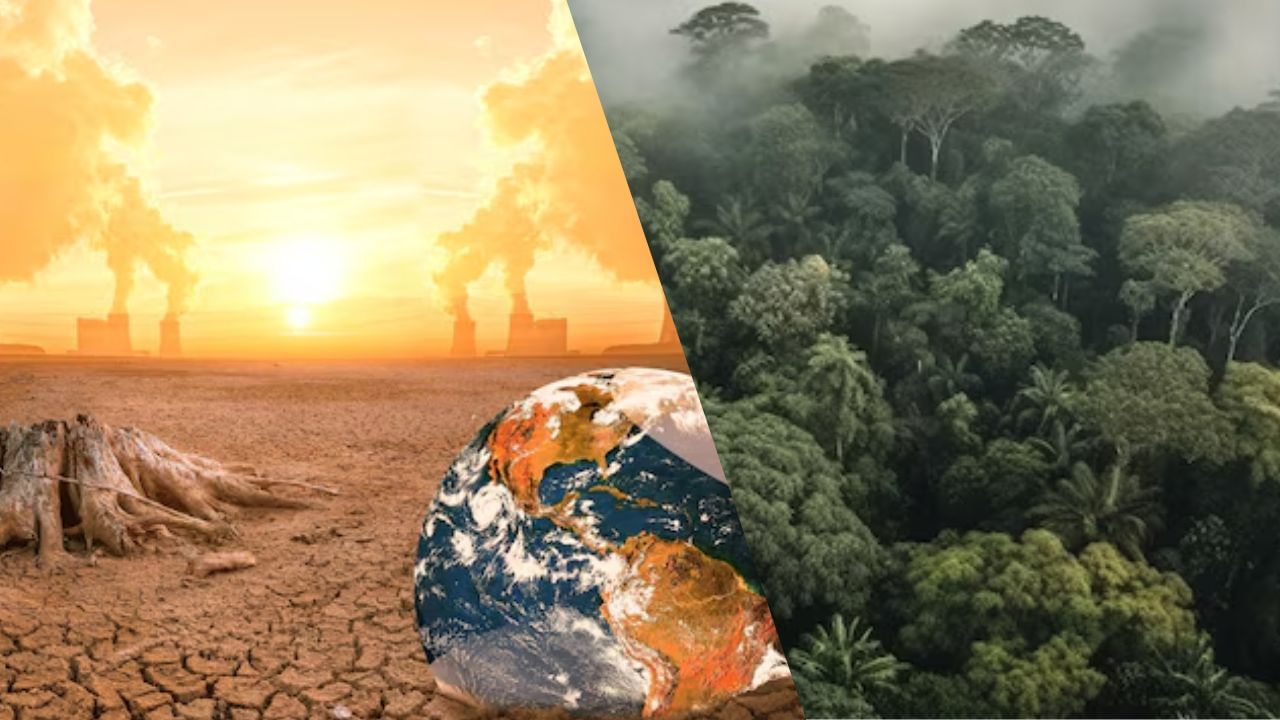

In contrast to the flooding experienced in parts of India, the Amazon rainforest is facing a concerning trend: a decrease in rainfall and increasing drought conditions. Recent research explores the factors contributing to this phenomenon, focusing on the impact of deforestation. The Amazon, the world’s largest tropical forest, spreads across nine South American nations. A new study reveals a decline in rainfall in the Amazon, specifically during the dry season, where rainfall decreased by about 21 millimeters annually between 1985 and 2020. Researchers investigated the role of deforestation and global warming in driving these changes. The research, led by scientists from the University of Sao Paulo, examined land use patterns and atmospheric data over a 35-year period in the Brazilian Legal Amazon. Statistical models were used to assess the relative influence of deforestation and global warming. The findings indicated that deforestation is the primary driver of the decreasing rainfall. Deforestation accounts for roughly three-quarters of the reduction in rainfall. Deforestation-related impact resulted in the majority of the rainfall decrease during the dry season. The Amazon rainforest plays a vital role in the global climate, with its trees contributing to regional rainfall patterns through transpiration. Cutting down forests disrupts this water cycle, leading to decreased rainfall. The study showed that deforestation is also changing the South American monsoon, which increases the chances of drought, mainly in Brazil’s central and southeastern regions. The Amazon faced record droughts in 2023 and 2024. These conditions led to disruptions in river transportation and increased strain on hydropower resources. The research highlights that climate alterations become most extreme when 10-40% of the forest is lost, indicating the rapid effect of deforestation. If the trend continues, dry season rainfall could further decline by 7 mm, and temperatures could increase by 0.6°C by 2035. The study forecasts a dire future for the Amazon, threatening the forest and its inhabitants. While there was a reduction in deforestation in the Brazilian Amazon, severe forest fires in 2024 damaged over 4.6 million hectares of primary forest, surpassing the average yearly damage in the previous decade.