
Afghanistan’s interim Foreign Minister, Amir Khan Muttaqi, recently made a symbolically charged visit to the prestigious Darul Uloom Deoband seminary in Uttar Pradesh, his first in India since the Taliban seized control in 2021. This significant trip underscores long-standing spiritual ties and suggests a potential easing of diplomatic tensions between India and Afghanistan.
Muttaqi received a warm and elaborate welcome at the renowned institution. He arrived in Deoband from Delhi, greeted by a group of fifteen prominent Islamic scholars. Substantial security measures were implemented across the area in collaboration with local and national authorities.
The seminary’s rector, Maulana Mufti Abul Qasim Nomani, led the welcoming proceedings. Students and faculty showered the Afghan minister with flowers, while a crowd gathered to capture the rare and high-profile event. During his time at the central library, Muttaqi participated in a formal scholarly session focused on Hadith under Maulana Nomani’s guidance. Subsequently, he was granted the esteemed privilege of teaching Hadith himself and received a ‘Sanad,’ a certificate of academic authority. This honor officially grants him the title “Qasmi,” signifying a prestigious academic link to Darul Uloom Deoband, and he will now be known as Maulana Amir Khan Muttaqi Qasmi.
Maulana Arshad Madani, the president of Jamiat Ulama-e-Hind, highlighted the enduring academic relationship between Afghanistan and Deoband, noting, “He has come to visit his alma mater, and after that, he will hold discussions with us.” Muttaqi expressed deep gratitude for the exceptional hospitality, viewing the reception as a beacon of hope for improved India-Afghanistan relations. He conveyed his optimism for the future of bilateral ties and invited Indian counterparts to visit Kabul, remarking, “The future of India-Afghanistan relations seems very bright.”
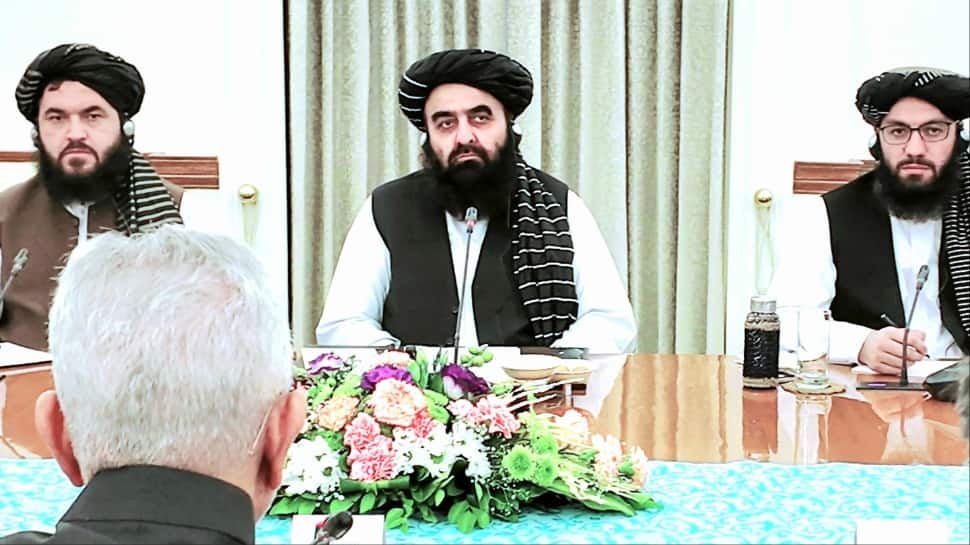
This visit is particularly noteworthy as Muttaqi is the most senior Taliban official to visit India since 2021. His earlier engagement with Indian External Affairs Minister S. Jaishankar underscores India’s nuanced approach to engaging with the Taliban regime. Muttaqi himself emphasized the deeper significance of the Deoband visit, describing it as a vital center for the Islamic world with a profound historical connection to Afghanistan. He expressed a strong desire to see continued religious educational exchanges for Afghan students in India. Founded in the late 19th century, Darul Uloom Deoband remains a leading hub for Islamic scholarship in South Asia. Its influence is deeply felt within Afghan religious communities, with many key Taliban figures tracing their ideological roots to Deobandi institutions. Muttaqi’s visit, therefore, served a dual purpose: a personal return to his academic roots and a strategic diplomatic gesture aimed at strengthening cultural ties and fostering goodwill.