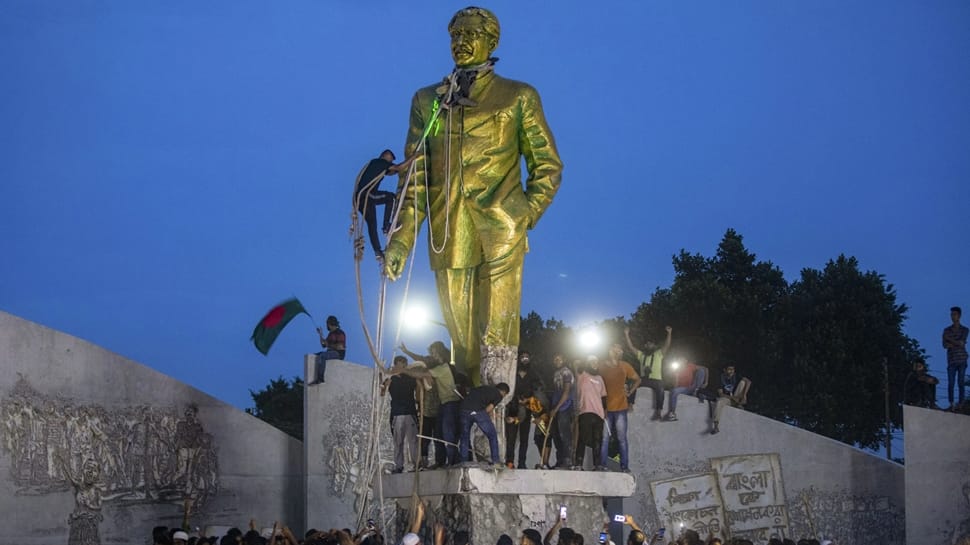

Contrary to hopes of a stable transition, Bangladesh finds itself in a precarious state with radical groups wielding considerable influence, and the prospect of another uprising looming. The interim government’s assurance of early elections has done little to alleviate underlying political and social tensions.
Key political actors, including the Bangladesh Nationalist Party (BNP), are voicing serious doubts about the integrity and even the occurrence of the upcoming elections. A significant point of contention is the deteriorating relationship between student leaders, who spearheaded recent protests, and the appointed advisers of the interim government. This discord is seen as a critical threat to the nation’s fragile stability.
The student movement, which successfully saw Sheikh Hasina ousted in August 2024, has now coalesced into the National Citizen Party (NCP). The NCP plans to participate in elections slated for February 2026, but suspicions are high regarding the motives of some advisers within the Muhammad Yunus-led interim administration. Reports suggest these advisers may be negotiating with established political parties to safeguard their future interests. The situation escalated when NCP leader Sarjis Alam alluded to dire consequences for these advisers, indicating a profound lack of trust.
International observers and analysts believe these developments point towards potential large-scale civil unrest, with the possibility of the NCP initiating further street protests, reminiscent of the August demonstrations. Adding to the complexity is the alleged involvement of Pakistan’s ISI, reportedly utilizing Jamaat-e-Islami to destabilize Bangladesh. An unstable Bangladesh serves the ISI’s strategic interests, particularly in relation to India’s security, with evidence of ISI-backed terror networks operating in the region.
Student leaders within the NCP are increasingly wary of interim government advisers, believing they are colluding with political parties to secure personal advantages and maintain their comfortable positions. They feel the interim government has not lived up to the promises of improved governance and stability that followed Sheikh Hasina’s departure.
Since the August uprising and the establishment of the interim government, Bangladesh has faced a barrage of negative press, including rising radicalization, assertive Islamist elements, economic hardship, allegations of ISI meddling, and heightened persecution of minority communities.
The NCP is pressuring for elections, but questions are being raised about the genuine commitment of influential bodies like Jamaat to a fair electoral process. Furthermore, even if elections are held, widespread public skepticism regarding their fairness persists, with many citizens indicating they will boycott a process they deem illegitimate. The current climate of political infighting and public distrust strongly suggests that another period of significant public mobilization is on the horizon.