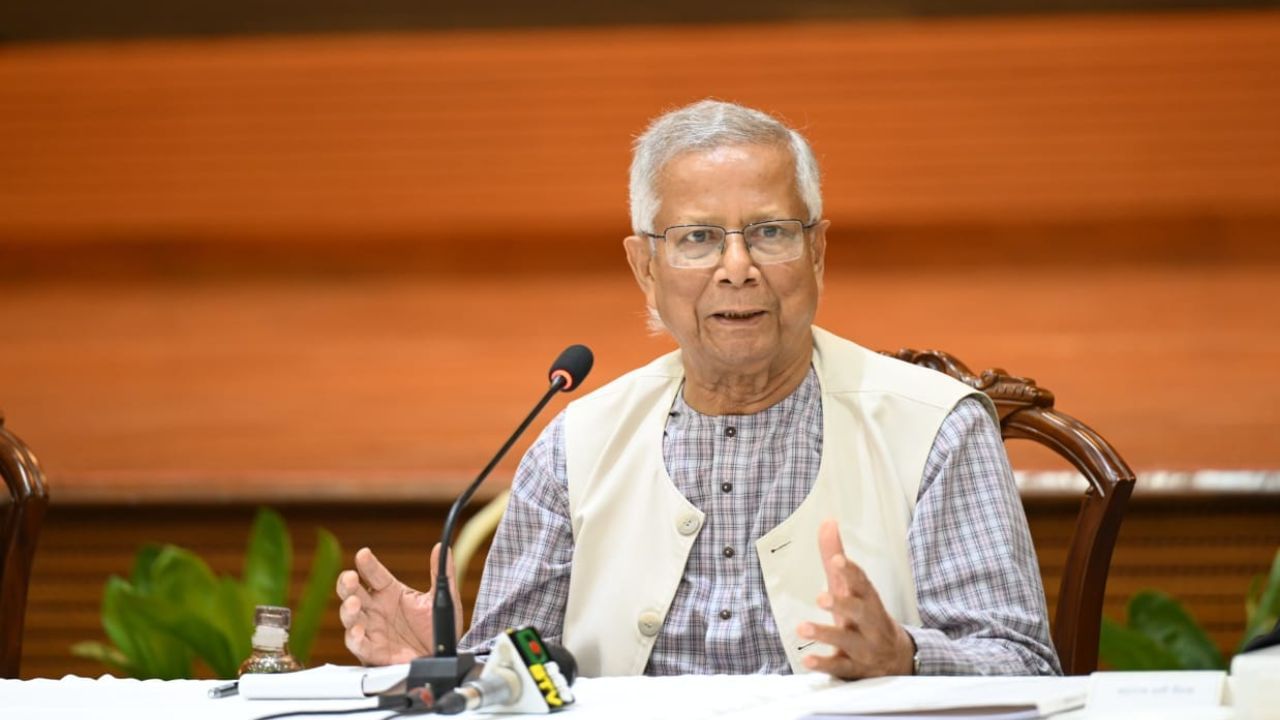

The interim government in Bangladesh has completed a year in power. Though elections have been scheduled, Muhammad Yunus will continue as the chief advisor until February 2026. This period has seen significant changes in Bangladesh’s foreign relations. There has been a notable shift in the relationships with major foreign partners, along with a distancing from India, who were close allies during the Awami League’s tenure.
While questions have been raised by many countries about Bangladesh’s domestic situation, the interim government has successfully strengthened its ties with major nations. Diplomatic experts believe that the advancement in foreign relations over the past year is due to Muhammad Yunus’s personal connections and positive global image.
During the 2007-08 caretaker government, there were no bilateral visits. Now, Muhammad Yunus has traveled to several countries, and leaders from many nations have visited Bangladesh.
During the 15 years of the former Sheikh Hasina administration, Bangladesh’s foreign policy was heavily focused on India. India was its biggest trade partner, while maintaining limited ties with China and Pakistan, who were considered enemies of India.
The Yunus government has changed this approach, enacting policies seen as unfavorable to India. Over the past year, Bangladesh has built relations with numerous countries to lessen its reliance on India, China, and Pakistan. After Sheikh Hasina’s departure, the worsening of relations with India led to a drop in medical tourism, student exchanges, and other forms of travel to India.
From a political perspective, India, China, Japan, Brussels (EU headquarters), and the United States are important to Bangladesh. Relations with key partners have significantly changed in the past year.
China and Pakistan are trying to take advantage of the deteriorating relations between Bangladesh and India. The Chinese government invited Muhammad Yunus for a visit, where he met with the Chinese President in Beijing. China is closely engaging with various political parties in Bangladesh.
Pakistan is trying to emphasize the shared historical and religious ties between the two countries. Delegations from both countries have exchanged visits, and they have started to increase trade and military cooperation.
Muhammad Yunus visited Japan at the invitation of the Japanese government. He held bilateral talks with the Prime Minister. Japan has shown interest in continuing its commitments to Bangladesh from the Awami League era but has shown no interest in new major agreements.
Bangladesh is in continuous talks with the European Union. The EU has expressed its desire to send observers to the upcoming elections. Discussions are also ongoing about a Partnership and Cooperation Agreement (PCA), which will set the framework for future relations with the EU. These discussions are expected to be completed by the end of the year.
There are claims that the United States asked Sheikh Hasina for a military base, which she denied. Some people believe the U.S. was involved in the transition of power. Last year, Yunus met with then-U.S. President Joe Biden in New York.
The relationship between the two countries initially warmed up, but that changed after Donald Trump became president in January. Trump also imposed extra tariffs on Bangladesh in April. However, discussions are still ongoing.
While the interim government has tried to seek alternatives to its relationship with India, it will not be easy for the Yunus government to lead Bangladesh towards progress without India. The world, along with India, will be closely watching the democratic elections scheduled for February.