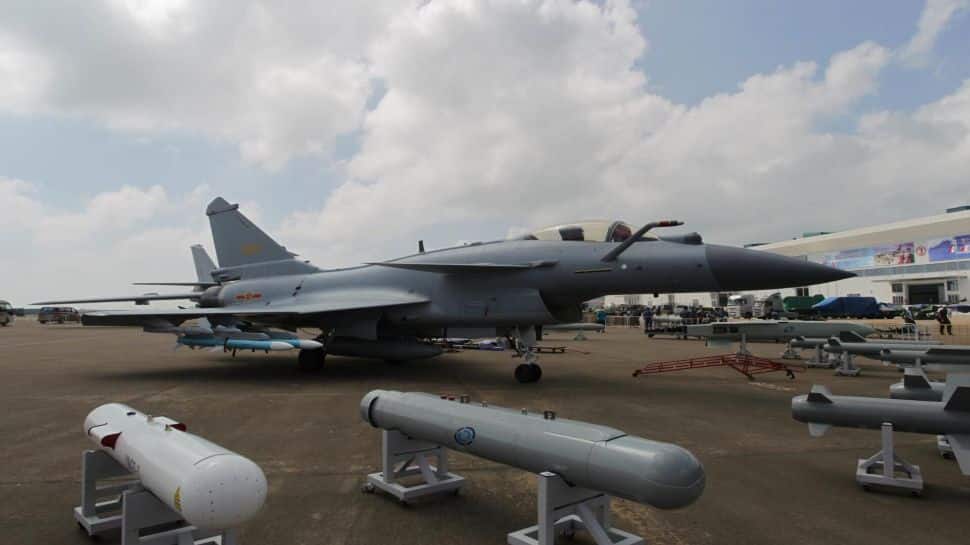

The People’s Liberation Army Air Force (PLAAF) is making significant strides in developing a new generation of air power, characterized by stealth technology, extended range, and advanced networked operations. This strategic evolution is causing ripples in global defense circles and is seen as a potential disruptor to the existing air dominance in Asia. Key to this transformation are aircraft such as the J-35 and its naval counterpart, the J-35A, which signify China’s entry into the competitive fifth-generation fighter market. These multirole aircraft are designed to perform strike missions and contribute to air superiority, operating as integral nodes within a broader information warfare network. Their internal weapon carriage is a critical feature for maintaining stealth. The J-35A’s modifications for carrier operations, including reinforced landing gear and corrosion-resistant materials, underscore China’s ambition to expand its power projection capabilities, leveraging its growing fleet of aircraft carriers. Enhancing its command and control capabilities, the KJ-3000 airborne early warning and control (AEW&C) platform provides critical long-range radar coverage and battlefield management. This system is designed to orchestrate complex air operations, coordinating fighter wings and missile defense systems in real-time, thereby acting as a substantial force multiplier. China’s commitment to future air combat concepts is further illustrated by experimental platforms like the J-50 stealth fighter. While its operational status is uncertain, its design—featuring internal weapon bays and advanced control surfaces—indicates a focus on penetrating highly contested airspace, possibly for roles such as bomber escort or deep penetration strikes. The J-36 Chengdu emerges as a heavy, multi-mission fighter optimized for long-range offensive operations and potential command-and-control roles. Its distinctive triple-engine configuration, tandem cockpit, and dorsal air intake point to a design prioritizing range, payload, and operational flexibility, including the coordination of unmanned assets. The WJ-700 HALE drone adds a persistent surveillance and strike capability to China’s arsenal. This unmanned aerial vehicle is capable of carrying air-to-surface munitions and loitering for extended periods, providing reconnaissance and attack options similar to US platforms in volatile airspace. The combination of these advanced systems represents a holistic approach to modern air warfare. AEW&C platforms, long-endurance UAVs, and stealth fighters are intended to operate in concert, facilitating intelligence gathering, air superiority, and precise strikes. The integration of ‘loyal wingman’ concepts further amplifies this networked approach, creating a combat environment that challenges traditional military planning. The PLAAF’s emerging ‘ghost fleet’ signals a qualitative leap in China’s air power, enhancing its stealth capabilities, strike range, and operational integration, thereby redefining the contours of air power competition in Asia.