

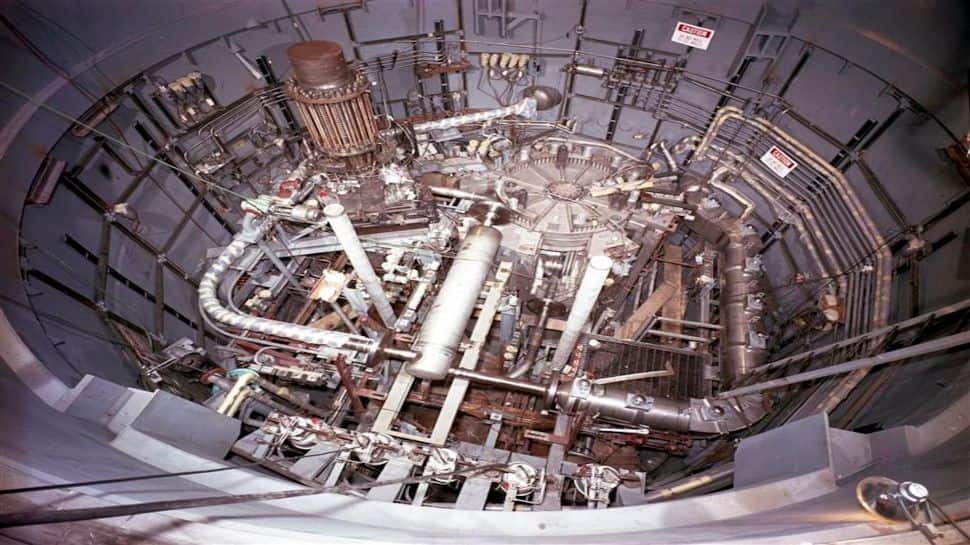

In a development poised to redefine global energy, China has successfully activated a molten salt reactor capable of converting thorium into uranium, effectively unlocking a nearly inexhaustible supply of nuclear fuel. This breakthrough revives advanced nuclear research originally pursued by the United States.
Scientists at the Shanghai Institute of Applied Physics have confirmed that their two-megawatt Thorium Molten Salt Reactor (TMSR) has achieved its primary objective: proving the practical conversion of thorium into fissile material. This success validates a concept that American scientists explored in the 1960s before shifting focus.
Project leaders in China have emphasized their diligent study of declassified American documents, viewing themselves as inheritors of this abandoned nuclear pathway. The nation’s commitment has now yielded a functional TMSR, marking a significant global first after decades of limited progress.
The environmental and resource advantages of thorium over uranium are substantial. Thorium is far more abundant than uranium, and its use in reactors produces considerably less persistent radioactive waste, according to industry bodies. Furthermore, concerns about uranium’s toxicity and the environmental impact of its mining are well-documented.
Beyond its fuel cycle advantages, the TMSR design offers operational efficiencies. It requires no external water for cooling, a crucial benefit for power generation in water-scarce areas. China is already planning a larger, 10-megawatt version for commercial power output.
This advancement not only secures China’s energy future but also represents a potential paradigm shift in how the world generates power, transforming a piece of forgotten American scientific heritage into a beacon for sustainable energy.