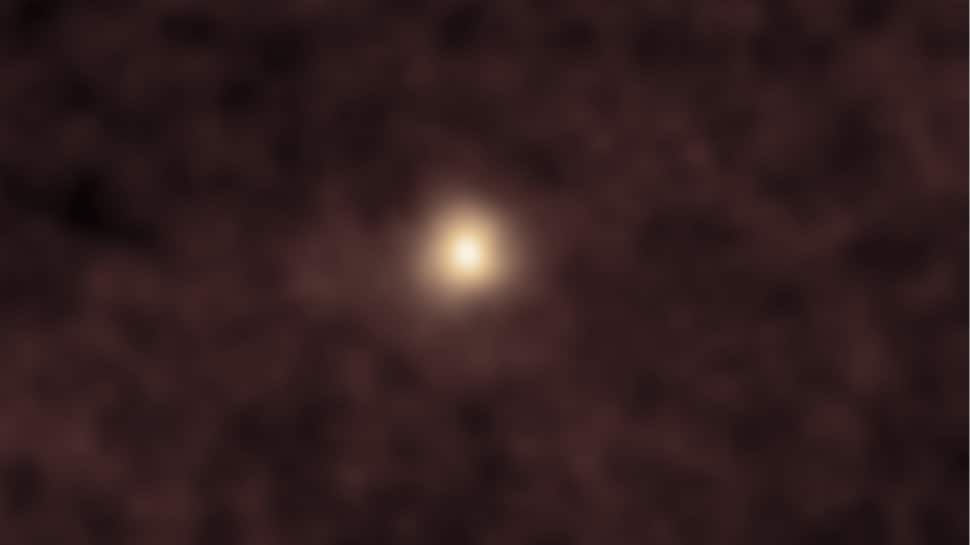

The scientific community is abuzz with the observation of comet 3I/ATLAS, an interstellar visitor detected hurtling through space at an incredible 130,000 miles per hour. This rare celestial body, the third of its kind to be confirmed, was jointly studied by NASA and ISRO. Observations were made using India’s 1.2-meter telescope in Mount Abu and a suite of NASA spacecraft, including orbiters around Mars and deep-space probes.
As 3I/ATLAS made its closest approach to Mars, NASA’s Mars Reconnaissance Orbiter captured highly detailed images of its expanding coma, a sign of the nucleus reacting to solar radiation. This provided some of the sharpest visuals ever obtained of an interstellar object.
The MAVEN orbiter’s ultraviolet instruments were key in identifying a hydrogen halo, confirming that water-ice on the comet was sublimating – a vital clue that this object carries water formed around a different star.
Adding to the comprehensive observation campaign, NASA’s Perseverance rover documented the comet’s rapid movement across the Martian sky. NASA’s solar observation fleet also played a role, using advanced imaging techniques to reveal subtle tail structures influenced by the Sun.
Data from NASA’s Psyche and Lucy missions, situated millions of miles away, were crucial for accurately mapping the comet’s hyperbolic orbit. Meanwhile, ISRO’s Mount Abu telescope provided clear optical images and spectroscopic data, identifying chemical signatures typical of active comets.
Studying 3I/ATLAS is a unique chance to probe the conditions of planetary formation in other star systems, compare the chemical makeup of objects from different galactic regions, and understand the dynamics of interstellar debris. Its immense speed ensures it will soon depart our solar system, but the scientific legacy of its visit will endure.