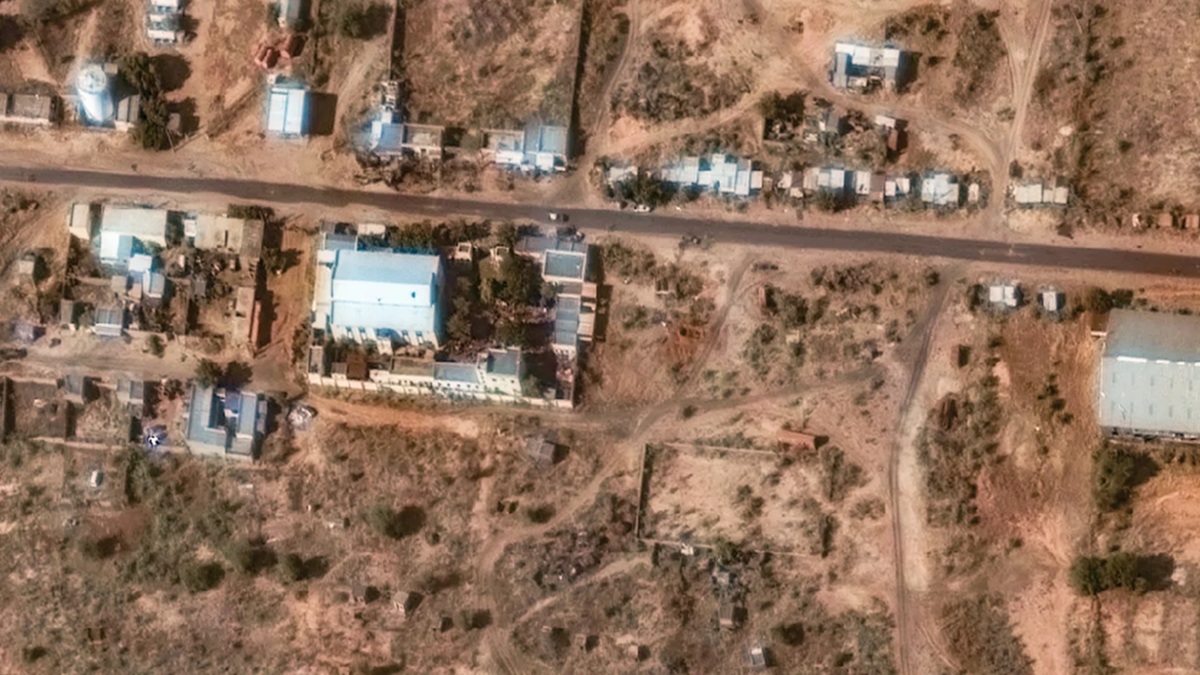

Evidence gathered from satellite imagery indicates the presence of mass burial sites in el-Fasher, Sudan, following the Rapid Support Forces’ (RSF) recent control of the city. Analysts from Yale University’s Humanitarian Research Lab have scrutinized images from Vantor, a satellite imaging company, identifying two major suspected grave locations. These sites are situated near a mosque to the north of the Saudi hospital and near a former children’s hospital, which is reportedly being used as an RSF detention center. The researchers emphasize the difficulty in determining the exact number of deceased due to the common practice of layered burials within single graves. Independent verification of the satellite data by the Associated Press corroborates the presence of recently disturbed soil at both identified locations, suggesting large-scale interments.
Initial satellite images from the period immediately after the RSF takeover show what appear to be bodies, marked as white shapes, in proximity to the Saudi and children’s hospitals, along with visible blood patterns. Witness accounts, video evidence shared online, and reports from the ground detail numerous killings that occurred after el-Fasher fell. The RSF has publicly denied any role in the hospital killings. However, their own video releases from the area, while confirming the existence of known structures, deliberately omit footage that might show fighters among corpses or executing individuals.
Further satellite data acquired by Planet Labs in late October revealed similar white shapes near a northern protective berm outside el-Fasher, accompanied by evidence of burnt vehicles. The Yale lab’s analysis suggests that many of these bodies were later relocated, hinting at attempts to conceal the extent of the violence. The pervasive communication outages and ongoing instability in el-Fasher severely impede efforts to accurately document the casualty figures. Dr. Adam Ibrahim Ismail, a local physician, is among the confirmed victims, reportedly detained and killed by RSF fighters, an act condemned by the Sudan Doctors’ Network as a deliberate attack on healthcare workers. UN Secretary-General António Guterres has called for accountability for these ‘horrendous’ atrocities. Investigators may face considerable challenges in gathering direct evidence of war crimes due to the current conditions and burial practices.
The conflict in el-Fasher is part of a wider pattern of violence, including a recent drone attack in el-Obeid, North Kordofan, that killed at least 40 people, an act widely attributed to the RSF due to their increasing use of drones. The UN humanitarian office has confirmed substantial casualties but has not officially assigned blame. The civil war, which erupted in April 2023 between the RSF and the Sudanese Armed Forces, has escalated significantly in both Kordofan and Darfur. The UN estimates over 40,000 deaths, with independent groups believing the true toll is much higher. This ongoing conflict is fueling a severe humanitarian catastrophe, displacing over 14 million Sudanese and leading to widespread famine and disease, with critical food shortages reported in two regions.