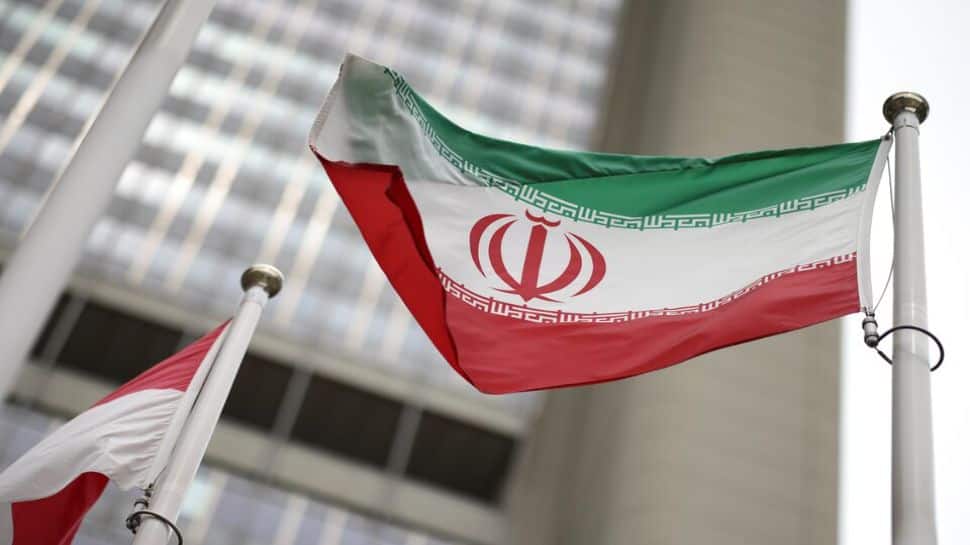

The 10-year nuclear pact between Iran and world powers, known as the Joint Comprehensive Plan of Action (JCPOA), has officially concluded. This critical agreement, finalized in Vienna in 2015, placed restrictions on Iran’s nuclear program in exchange for sanctions relief. The deal’s “termination day,” October 18, 2025, signified the end of its decade-long implementation period, as set forth by UN Security Council Resolution 2231.
Resolution 2231, adopted unanimously in July 2015, served as the legal endorsement for the JCPOA. It led to the termination of previous UN sanctions and six earlier Security Council resolutions that targeted Iran’s nuclear endeavors. Importantly, it removed Iran from Chapter 41 of the UN Charter, thereby precluding the Security Council from imposing economic sanctions, travel bans, or diplomatic severances without resorting to military measures. The agreement also included specific time-bound restrictions on conventional arms and ballistic missile activities.
Over the course of the JCPOA’s existence, the International Atomic Energy Agency (IAEA) consistently monitored Iran’s compliance and reported no indications of the nation pursuing nuclear weapons. With the expiration of the deal, Iran considers all limitations and related mechanisms concerning its nuclear program to be terminated. The Iranian Foreign Ministry has affirmed that all JCPOA provisions have now expired. Despite this development, Iran reiterates its commitment to diplomacy as its preferred approach.
The JCPOA began to unravel following the United States’ withdrawal in May 2018, which resulted in the reimposition of sanctions. Iran observed the terms of the deal for an additional year, anticipating economic benefits from European signatories. When these expectations were not met, Iran progressively reduced its compliance, exercising its rights under the deal’s articles that allow for adjustments in response to other parties’ non-adherence.
As tensions rose, Iran advanced its uranium enrichment capabilities to 60 percent, a level suitable for medical isotopes and research reactors, though still short of weapons-grade purity. Iranian officials have consistently stated that these steps are reversible and dependent on the lifting of sanctions and the revival of the JCPOA.
A key feature of the JCPOA was the “snapback” provision, allowing any party to reinstate UN sanctions if Iran committed a “significant” violation. In late August 2025, the European signatories—France, Germany, and the UK—activated this mechanism, reimposing sanctions on arms, missiles, and financial activities. Tehran characterized this action as politically driven and legally unfounded, warning it would preclude further European involvement in its nuclear file. This decision followed an IAEA report expressing concerns about Iran’s cooperation and its enriched uranium reserves, leading the IAEA Board of Governors to declare Iran in breach of its non-proliferation obligations.
In the aftermath, Iran’s Parliament halted cooperation with the IAEA, citing concerns about the agency’s findings being used to justify external interventions. Foreign Minister Araghchi recently stated that Iran has no incentive to negotiate with Europeans after their snapback action. In a formal notification to the UN Secretary-General, Iran’s Foreign Minister declared the expiration of the JCPOA and Resolution 2231 renders all associated sanctions void.
Iran has long asserted its right to a peaceful nuclear program, consistent with the Nuclear Non-Proliferation Treaty (NPT). Despite enduring decades of sanctions and alleged sabotage, Iran’s focus remains on nuclear energy for peaceful applications. International bodies and intelligence agencies have found no evidence of a military nuclear dimension. With the JCPOA’s formal end, Iran claims full sovereignty over its nuclear program and remains open to diplomatic solutions, contingent on guarantees for its national security and economic interests.