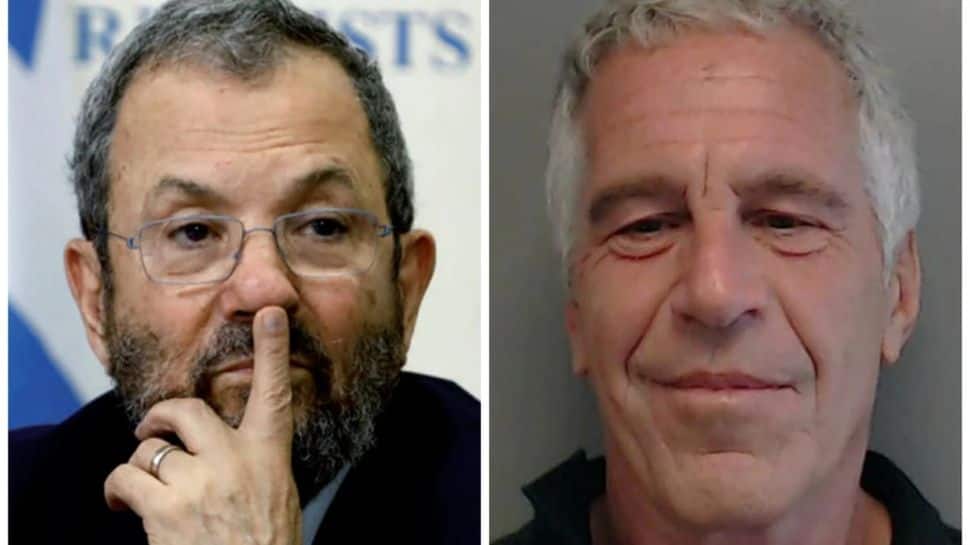

An intricate web of influence involving financier Jeffrey Epstein and former Israeli Prime Minister Ehud Barak has been uncovered, revealing efforts to establish Israeli security presences in West Africa, notably Cote d’Ivoire. The operation appears to have capitalized on the nation’s post-election instability in 2010 to foster security partnerships and gain strategic leverage.
Following the disputed 2010 elections and subsequent violence in Cote d’Ivoire, attention was drawn to the political turmoil. However, documents indicate that Epstein and Barak were actively pursuing opportunities in the background. Epstein reportedly saw the country’s volatile situation as a prime opening for Barak’s security services, as evidenced in private communications.
By 2013, Barak had transitioned from government service and began offering specialized Israeli security solutions to governments under duress. Epstein played a crucial role, providing connections and support for these ventures. Leaked information suggests Epstein was involved in circulating proposals drafted by former Israeli intelligence personnel, focusing on telecommunication surveillance for Cote d’Ivoire. These discussions eventually led to a formal security pact between Israel and Cote d’Ivoire in 2014.
Epstein was instrumental in arranging high-level meetings. On June 18, 2012, the same day Barak met President Ouattara, Ouattara’s son engaged with Epstein in New York. Later that year, Epstein met Ouattara’s niece before a scheduled meeting with Barak. Epstein’s travel plans included potential visits to other African nations, indicating a broader strategic vision.
While Barak has characterized his relationship with Epstein as personal, the evidence suggests Epstein functioned as a critical facilitator. His involvement continued even after Barak stepped down from his ministerial role in March 2013. Communications detailing surveillance plans for the capital city, Abidjan, were exchanged, with efforts made to maintain discretion.
A temporary pause in negotiations, prompted by a UN inquiry into Israeli munitions, did not deter Barak. He maintained contact with former Israeli intelligence officials and key figures within the Ivorian government, including the President’s chief of staff. Barak’s subsequent trip to Abidjan in August 2013, officially for hospital development, included significant engagements with Ivorian leadership.
A former chief of Israeli military intelligence provided Barak with an extensive briefing on a proposed signals intelligence (SIGINT) system for Cote d’Ivoire in September 2013. The document emphasized its grounding in practical Israeli intelligence experience and its suitability for knowledge transfer.
Epstein’s extensive network in New York assisted in coordinating further discussions. The formalization of a defense and internal security agreement between Israel and Cote d’Ivoire occurred in mid-2014, following the lifting of UN embargos. Additionally, it has emerged that Yoni Koren, a former intelligence officer closely linked to Barak, lodged at Epstein’s home, serving as an informal liaison.