
As a deadline set by US President Trump nears, the potential for strict sanctions against Russia looms, alongside the possibility of false flag operations and attacks on Russian assets. These developments heighten fears of a direct confrontation between Russia and NATO, prompting a sense of nuclear unease throughout Europe. The situation is exacerbated by Russia’s accelerating tests of a super missile, and the mobilization of its allies for potential conflict.
With failed ceasefire talks and diplomatic efforts, it is evident that Putin is unlikely to agree to a truce, further straining relations between the US and Europe. This situation may drive Russia to rely on its most potent weaponry for defense.
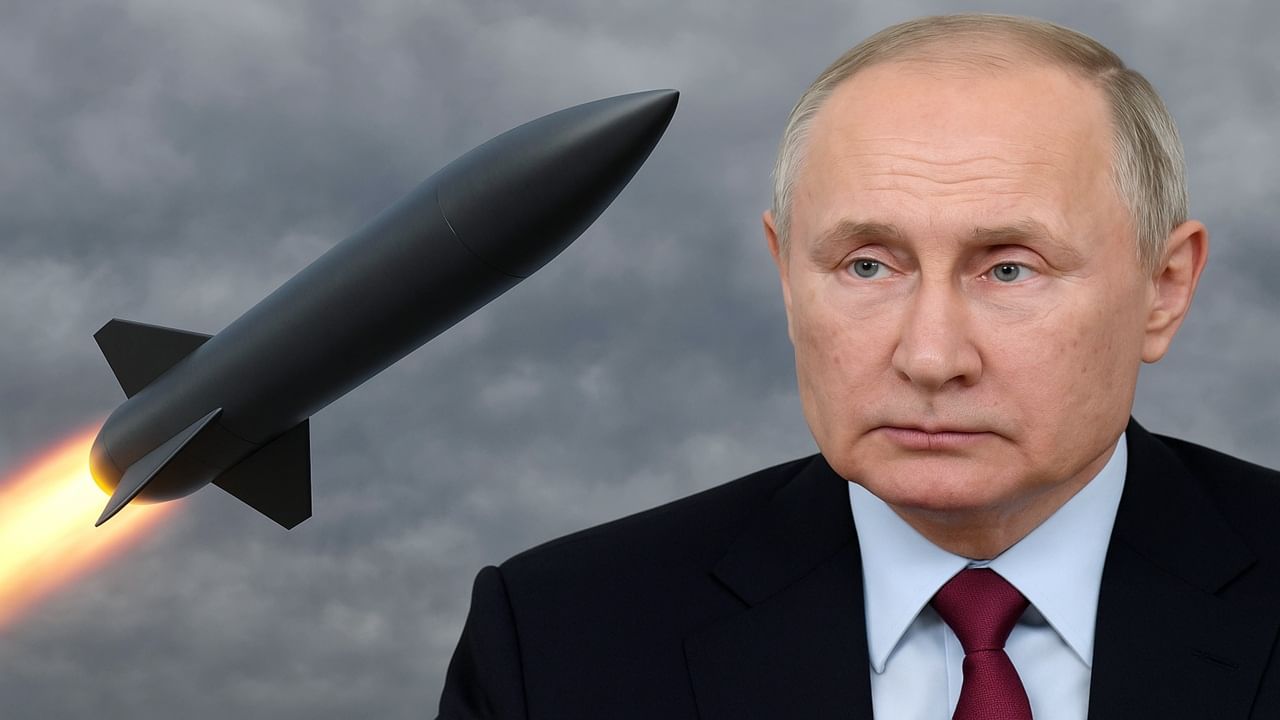
Putin has authorized testing of the super cruise missile, indicating an escalation in defense strategy. The deployment of this advanced, difficult-to-intercept missile has led to the reopening of the Novaya Zemlya testing site, a site used for extensive nuclear testing, after 33 years.
The Burevestnik, Russia’s super cruise missile, marks a global first as the only intercontinental cruise missile powered by a nuclear reactor, allowing for continuous flight for about two decades. Capable of altering course, and flying at low altitudes, the missile achieves precision and invulnerability. It is also designed to carry out nuclear attacks. NATO has designated it with the codename SSC-X-9 Skyfall.
Often called the “Flying Chernobyl”, the missile is a technological breakthrough as it introduces nuclear power to missiles, something previously limited to submarines and aircraft carriers. Russia faced significant hurdles in developing this complex system.
Belarus as a Potential Battlefield: The missile underwent several tests through 2019. In one test, the missile covered approximately 36 kilometers in two minutes, but crashed in the Barents Sea, causing an explosion during recovery that resulted in the deaths of seven Russian scientists. Putin stated in 2023 that the missile was combat-ready, with a deployment scheduled for 2025.
Putin’s mention of its readiness at the Valdai Summit signals the final stages of its preparation. Belarus, a key ally, is also readying for conflict. Russian forces are deploying in Belarus for the Zapad 2025 military exercise, which facilitates a military buildup along the Ukrainian border.
Belarus is seeing preparations for a possible military conflict. The Zapad 2025 exercise is occurring near the Ukrainian border and serves as a pretext for a military build-up along the border. Belarus has increased its military vehicle numbers and deployed new MLRS brigades, with air assault drone operators stationed along the Ukrainian border. This positioning suggests that Putin could open a front against NATO and Ukraine from Belarus if a conflict begins.
Russian Drones Near Romanian Border: The potential for a direct conflict between Russia and NATO is rising as Russian explosive drones are appearing in neighboring countries. Recent events include the presence of drones near the Romanian border on August 6. These drones were linked to attacks near Odesa, Ukraine, close to the Romanian border. Romanian radar tracked the drones, prompting the deployment of F-16 aircraft to patrol its airspace. While no drones crashed in Romania, there have been previous incursions into Lithuania.
Poland Increases Military Deployments Near Kaliningrad: NATO is also responding with increased military deployments. Poland has augmented its tank deployments near Russia’s Kaliningrad base, positioning South Korean K2 Black Panther tanks. Kaliningrad serves as a Russian nuclear force base, fueling concerns about potential attacks. NATO is actively expanding its presence in the Arctic region to counter Russia’s influence, with agreements among the US, Canada, and Finland. The nations are involved in an agreement with shipbuilding companies called the ICE Pact.
NATO is planning to establish advanced ASC (Arctic Security Cutter) ships to enhance its capability against Russia in the Arctic. Russia currently dominates the region with more than 50 bases. Though NATO is taking steps, it will likely take years to compete with Russia. Therefore, NATO is focusing on deploying military strength near the Russian border to exert pressure on Russia.