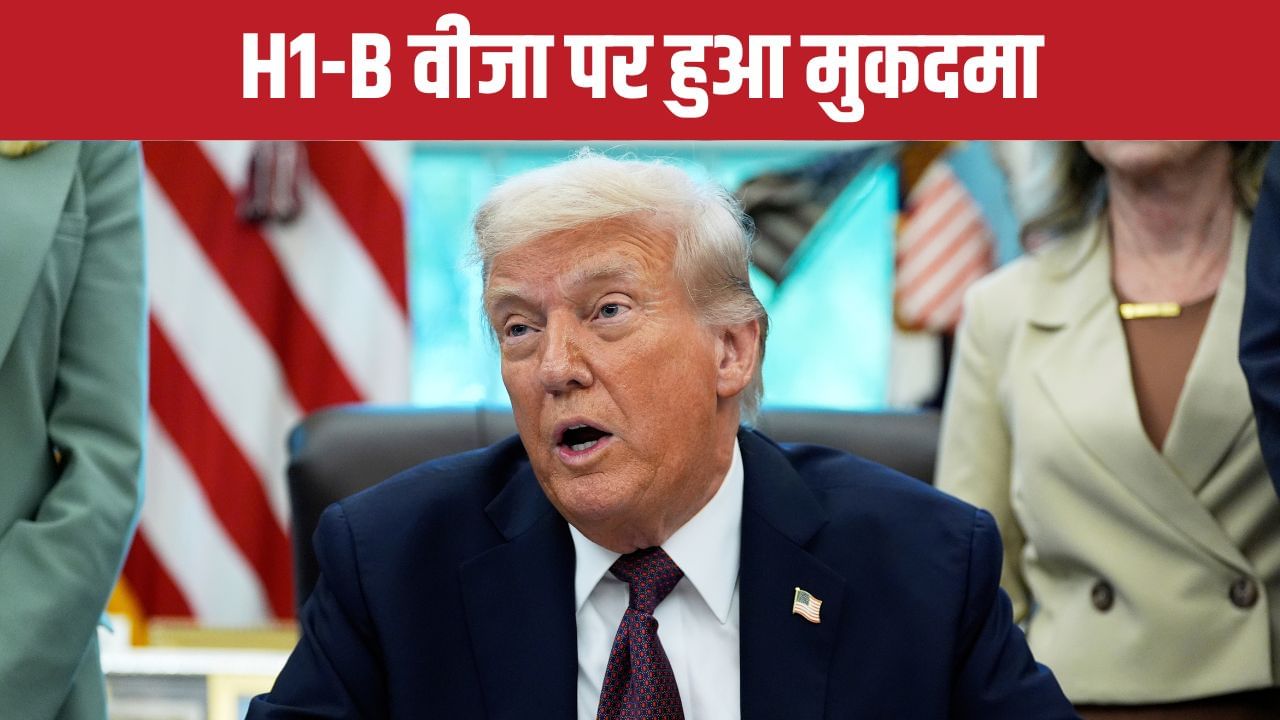

A lawsuit challenging the increased fees for H-1B visas, implemented by the Trump administration, has been filed in the United States. The new fees, amounting to approximately 8.8 million rupees, have sparked legal action. The lawsuit was initiated by a coalition of healthcare providers, religious groups, university professors, and other entities in federal court. The plaintiffs contend the fee increase has generated considerable disruption for employers, employees, and federal agencies.
President Donald Trump’s proclamation on September 19th led to the fee hikes. Trump justified the increased costs by stating the H-1B visa program was being abused to substitute American workers with less-skilled, lower-paid foreign labor. The new fees were to take effect within a very short timeframe, which caught employers off guard.
The lawsuit, filed in San Francisco’s federal court, underscores the significance of the H-1B program for hiring healthcare workers, teachers, and its contributions to innovation and economic expansion. It aids in the employment of specialized professionals. The Democracy Forward Foundation and Justice Action Center warn that hospitals could lose doctors, religious groups could lose clergy, schools could lose teachers, and crucial innovators could depart from industries unless the visa changes are addressed. The plaintiffs are seeking an immediate injunction and restoration of the previous operational conditions for employers and employees, labeling the fee increases as an anti-immigration measure.
Those opposed to the H-1B visa program highlight that it allows foreign workers, who may be willing to work for as little as $60,000 per year, to fill jobs, contrasting with American tech workers’ salaries, which often exceed $100,000. The H-1B visa has historically been awarded via a lottery system. This year, Amazon received the largest number of visas, followed by Tata Consultancy, Microsoft, Apple, and Google. California has the highest number of H-1B workers.
American University Professors Association President Todd Wolfson expressed his concern that the elevated fee could prevent promising individuals from coming to America and impacting research. Regional Director of the United Automobile, Aerospace, and Agricultural Implement Workers of America, Mike Miller, stated that Trump’s plan favors wealth and connections over scientific expertise and hard work. Democracy Forward President Skye Perryman pointed out the high fees could promote corruption and are considered illegal as the H-1B program was created by Congress and not subject to alteration via executive order.
White House spokeswoman Abigail Jackson defended the administration’s stance, asserting the order’s legality. She stated the intent was to prevent corporations from exploiting the system and negatively influencing American wages.
The H-1B program permits U.S. employers to hire foreign specialists in areas like technology, healthcare, and education. Tech companies are highly dependent on the visa for recruiting international talent. Annually, 65,000 visas are granted, with an additional 20,000 for advanced degree holders. The visas typically are valid for three to six years. According to governmental statistics, India led the program with 71% approval last year, while China had 11.7%. Employers already pay fees, which range from $2,000 to $5,000. The Trump order stipulates an 8.8 million rupee cost per H-1B hire.