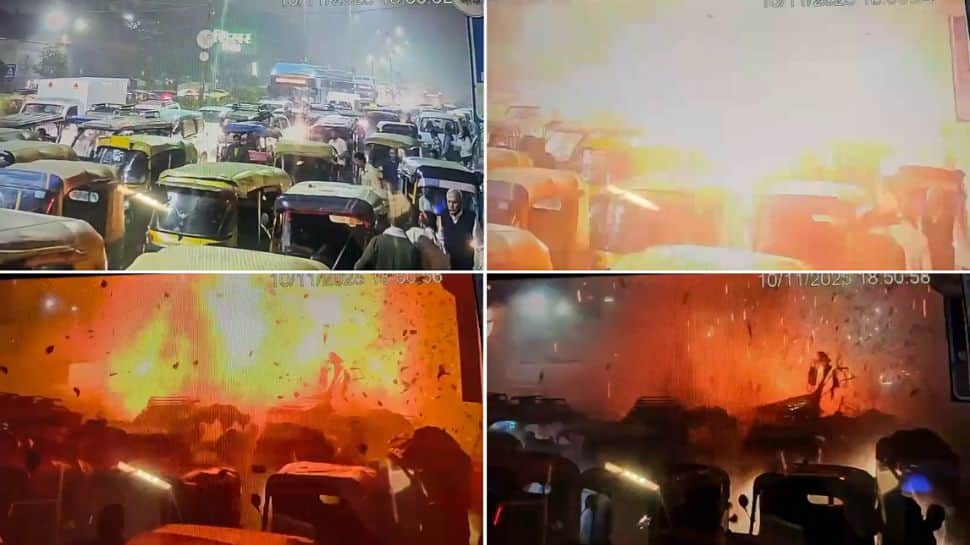

India’s security apparatus has successfully dismantled what could have been the world’s most devastating terror attack. A comprehensive plot involving 32 vehicles loaded with an immense 3,200 kilograms of explosives was exposed and foiled. This sophisticated operation, orchestrated by a seemingly well-resourced group, aimed to inflict unimaginable casualties across the country.
The unearthed conspiracy details the planned deployment of 32 vehicles, each intended to function as a mobile bomb. A significant quantity of explosives, primarily ammonium nitrate, had been amassed for this purpose, with each car designed to carry approximately 100 kg. The scale of the explosives alone is unprecedented in recent terror history.
Experts have detailed the catastrophic consequences of such an attack. A single detonation of 3,200 kg of ammonium nitrate would generate a blast comparable to significant military-grade explosives. The immediate area would be leveled, and the resulting shockwaves would be lethal, causing widespread destruction of buildings and infrastructure over a considerable radius. Thousands of lives would have been lost in a coordinated attack.
Past major terrorist incidents highlight the severity of the averted threat. The Oklahoma City bombing, which killed 168, used 1,800 kg of explosives. The 1993 Mumbai blasts, responsible for 257 deaths, involved roughly 1,500 kg. The 3,200 kg of explosives in India’s case suggests a potential death toll that would eclipse these tragic events by a significant margin, making it a truly global-scale disaster.
While the primary threat has been neutralized, the investigation continues to address lingering concerns. A small quantity of explosives (300 kg) remains unaccounted for, and only a fraction of the planned vehicles (3) have been recovered. Locating the remaining 29 vehicles is crucial for uncovering the full reach of this terror network. The successful prevention of this mass-casualty event is a testament to India’s intelligence capabilities, but the ongoing search for missing materials underscores the need for sustained vigilance.