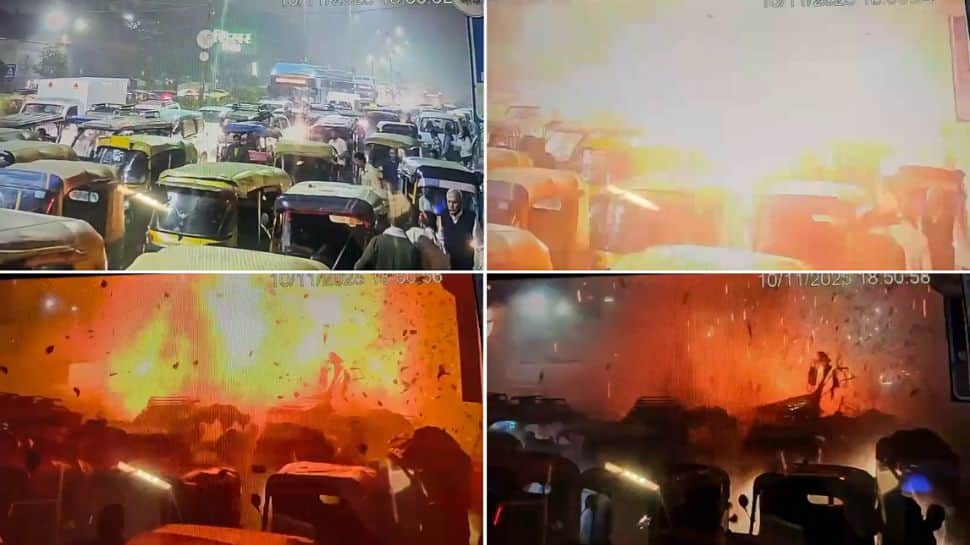

In a stunning counter-terrorism success, India has dismantled a colossal terror plot that aimed to unleash 32 car bombs across the nation, carrying a staggering 3,200 kilograms of explosives. This expertly planned “white-collar” terror operation was poised to inflict mass casualties and destruction on a scale never before witnessed, a catastrophe that would have shaken the world. The discovery has sent ripples of relief and urgency through India’s security establishment.
The conspiracy revealed a chilling logistical operation involving 32 vehicles designed as mobile explosive devices. Investigators uncovered an immense stockpile of 3,200 kilograms of ammonium nitrate, with plans to distribute approximately 100 kilograms per vehicle. The coordinated detonation of these devices would have created a series of devastating explosions, dwarfing previous acts of terrorism. The potential for widespread panic and loss of life was immense.
Experts have calculated the devastating potential of the uncovered explosives. Detonating 3,200 kilograms of ammonium nitrate would unleash a blast equivalent to 2.5 tons of TNT. The immediate vicinity, extending 50 meters, would face complete obliteration. Lethal shockwaves traveling at high velocities could cause severe internal injuries, leading to an estimated 300-350 fatalities in crowded locales. The destructive radius would extend to structural collapse of buildings within 150 meters, shattering windows up to 400 meters away, and causing perceptible ground tremors up to 800 meters.
To grasp the gravity of this foiled plot, historical attacks provide a stark comparison. The Oklahoma City bombing in 1995, using 1,800 kilograms, killed 168. The 1993 Mumbai serial blasts, with around 1,500 kilograms, claimed 257 lives. Applying these metrics, the 3,200 kilograms of explosives in the Indian plot could have resulted in over 500 deaths and thousands of injuries, potentially making it the most lethal terror attack in human history.
While the main threat has been neutralized, crucial elements of the plot remain unresolved. Authorities have recovered 2,900 kilograms of the explosives, but 300 kilograms are still missing. Furthermore, only three of the 32 vehicles—a Hyundai i20, an EcoSport, and a Brezza—have been located. The discovery of the remaining 29 vehicles is vital for understanding the full scope of the network and preventing any secondary attacks.
India’s successful counter-terrorism operation averted an unprecedented national tragedy. The vigilance and swift action of intelligence agencies protected countless lives and prevented a disaster that would have left an indelible scar on the nation. However, the lingering questions about missing explosives and vehicles necessitate continued high alert and comprehensive investigation to ensure lasting security.