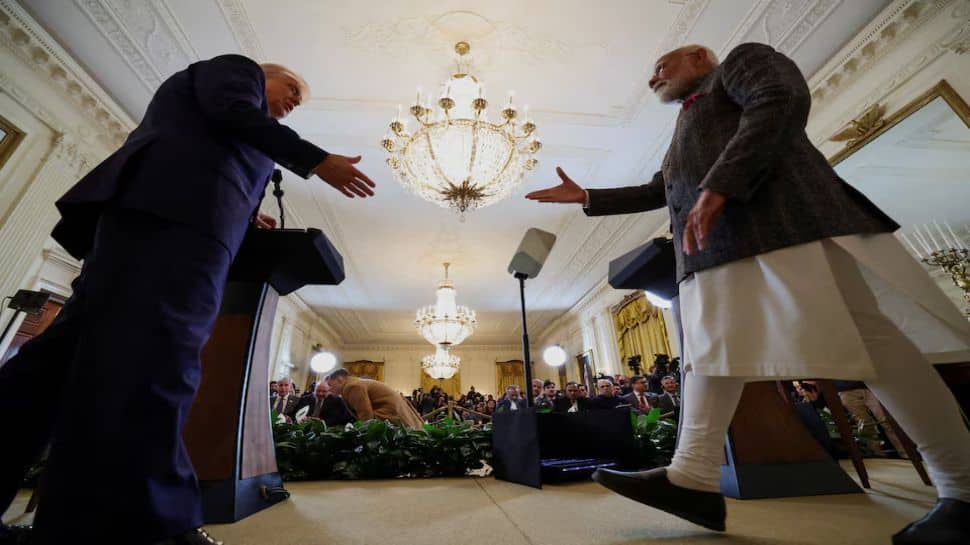

A potential landmark trade agreement between India and the United States is gaining significant traction, with a key Indian delegation set to visit Washington this week for advanced negotiations. These talks, which began in February, are focused on navigating the complex landscape of tariffs and establishing a more favorable trade environment. The current visit represents a crucial step in the ongoing dialogue aimed at fostering robust economic ties and removing trade impediments. This renewed push follows a recent productive exchange between Prime Minister Narendra Modi and US President Donald Trump, who have set a target to conclude the initial phase of a trade deal by fall 2025.
Officials involved in the process suggest that the five rounds of discussions held so far have been highly constructive, with progress described as steady and positive. The focus is now shifting towards the timing of a potential signing of the agreement. The United States is increasingly looking towards India for strategic economic alignment, particularly in light of evolving global trade dynamics. US Treasury Secretary Scott Baesant’s criticism of China’s export policies on critical materials underscores the broader geopolitical context influencing these trade discussions.
Earlier engagement, such as Commerce and Industry Minister Piyush Goyal’s trade consultations in New York, has laid the groundwork for the current negotiations. During his visit, Minister Goyal engaged with senior US trade officials to discuss the proposed trade framework. The presence of significant tariffs, including a 50% levy on certain Indian exports to the US, underscores the critical need for a bilateral trade agreement to facilitate smoother commerce. Such an agreement is expected to address these protective measures and create a more open market.
The ambition behind this pact is substantial: to more than double bilateral trade to $500 billion by 2030, a significant leap from the current $191 billion. The United States continues to be India’s most important trading partner, reflecting the deep economic interdependence. This proposed agreement is thus of paramount importance for India’s trade policy, aiming to streamline cross-border transactions, boost economic output, and foster job creation in both countries.