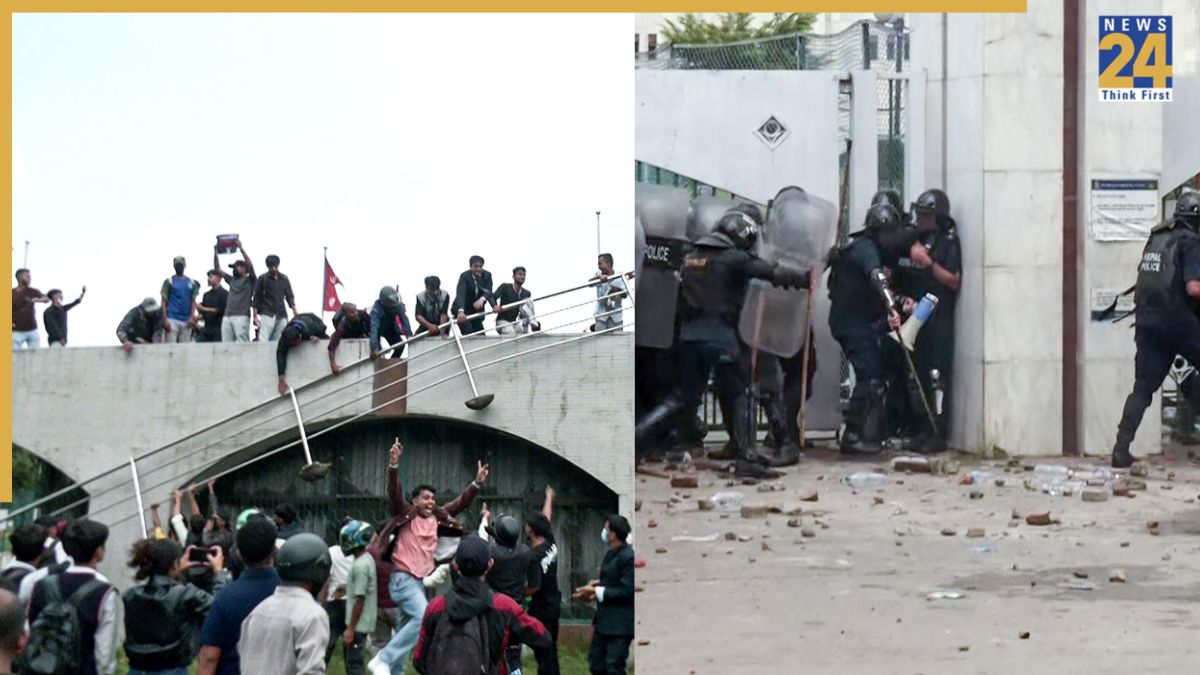

Kathmandu, Nepal, is currently engulfed in a period of unrest, with protests resulting in a tragic toll of at least 14 lives. The demonstrations, largely organized and led by Generation Z, commenced on Monday. The primary drivers of these protests include significant concerns over governmental corruption and the recent ban on several social media platforms. On Monday, protesters caused damage to the parliament gate and engaged in gunfire. There are reports of numerous injuries, and the potential for more casualties remains.
Due to the increasing violence, authorities implemented a curfew across various crucial sectors of the capital, which was in effect from 12:30 pm to 10 pm. The Kathmandu district administration office (DAO) broadened the curfew’s scope to include the residential areas of key government officials, such as the president, prime minister, and vice-president, in addition to Singha Durbar. Specific locations affected by the curfew include the President’s residence in Shital Niwas, Maharajgunj, the vice-president’s residence in Lainchaur, all sides of Singha Durbar, the prime minister’s residence in Baluwatar, and neighboring zones.
The demonstrations, which began peacefully, escalated when protesters breached barricades and entered restricted areas near the Parliament. Police responded with water cannons, tear gas, and rubber bullets in response to protesters throwing objects and voicing anti-government sentiments. Some protesters were able to enter the Parliament compound, which exacerbated the tension. The Nepal Army has been deployed to help manage the situation.
The current protests were incited by the Nepali government’s decision to ban 26 unregistered social media platforms, which became effective on September 4. This ban encompassed widely used apps like Facebook, Instagram, WhatsApp, YouTube, and Snapchat. This action sparked widespread public outrage, especially among the youth, who have accused the government of suppressing free expression while failing to address systemic corruption. They perceive the social media ban as a direct infringement on their freedom of speech and their right to expression. Parties like CPN-UML and Nepali Congress have been targeted for human rights violations and abuse of power.
A protester shared, “We were planning a peaceful protest, but we saw police violence as we proceeded. The police are firing at the people, which is against the essence of peaceful protest. Those in power cannot impose their will on us. Anti-corruption protests are being suppressed, which violates freedom of speech and expression. The police have been firing at protesters.”
Another protestor stated, “This is a protest by the new generation in Nepal. A new form of oppression has been introduced in the nation. The potential of Nepali youth is being exploited, and high-ranking officials are involved in the misuse of power. Human rights are being violated by major political parties: CPN-UML, the radical nationalist party; Nepali Congress, which has been supporting from the background; and Maoist Center, which has remained silent over the issue. They also had banned TikTok at the time.”
Nepal police stated that nine people lost their lives due to the violence.
Protests also spread to Pokhara, Butwal, Chitwan, Nepalgunj, and Biratnagar.