
Amidst ongoing conflicts, Israeli Prime Minister Benjamin Netanyahu has once again raised the specter of ‘Greater Israel,’ sparking controversy across the Middle East. Netanyahu frames this as a pivotal historical and spiritual mission, raising concerns about regional stability. The concept of Greater Israel, if implemented as envisioned by Netanyahu, implies a substantial expansion of Israeli territory, potentially encompassing areas of Palestine, Jordan, Egypt, and other neighboring nations.
The term ‘Greater Israel’ carries both biblical and political weight, particularly within the context of Zionist ideology. This vision, rooted in the writings of Zionism’s founder, Theodor Herzl, envisions a Jewish state extending from the Nile to the Euphrates River. This concept gained traction after the 1967 Six-Day War, and continues to resurface in discussions of the region.
Borders of Greater Israel:
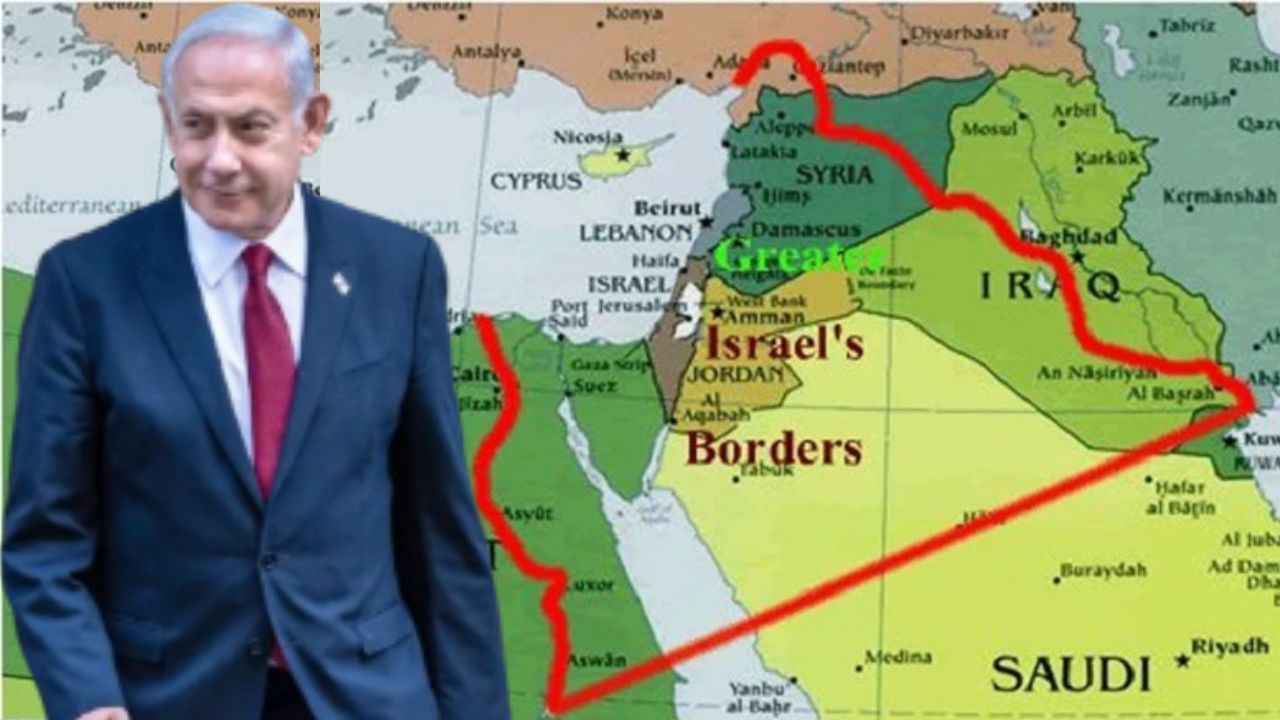
The concept of Greater Israel is rooted in biblical interpretations, defining its potential boundaries. According to the Book of Joshua (chapters 13-22), the land allocated to the Israelites extended from the south of Jerusalem to the northern reaches of the Sea of Galilee. The ‘promised land,’ as described, is defined by the phrase ‘from the Nile to the Euphrates,’ a territory traditionally understood to be 50 miles wide and 150 miles long, commonly described as ‘from Dan to Beersheba.’
This interpretation suggests that Greater Israel could include:
* The western region of Iraq.
* Parts of Egypt.
* Lebanon and Syria.
* Northern Saudi Arabia.
Size of the Proposed Greater Israel:
Current Israeli territory spans approximately 22,000 square kilometers. The realization of ‘Greater Israel’ could see the nation’s area expand to approximately 100,000 square kilometers, incorporating portions of Syria, Lebanon, Palestine, Egypt, and Iraq.
Historical Context: The Cairo Summit and the Map of Greater Israel
The concept of Greater Israel was brought to light at the 1990 Cairo Arab summit. Libyan President Muammar al-Gaddafi displayed a map of Greater Israel to Yasser Arafat, the leader of the Palestinian Liberation Organization. The map illustrated the inclusion of Palestine, Jordan, Lebanon, Syria, Iraq, portions of northern Saudi Arabia, and significant parts of Egypt. Notably, this map had been presented at the AIPAC conference a year earlier.