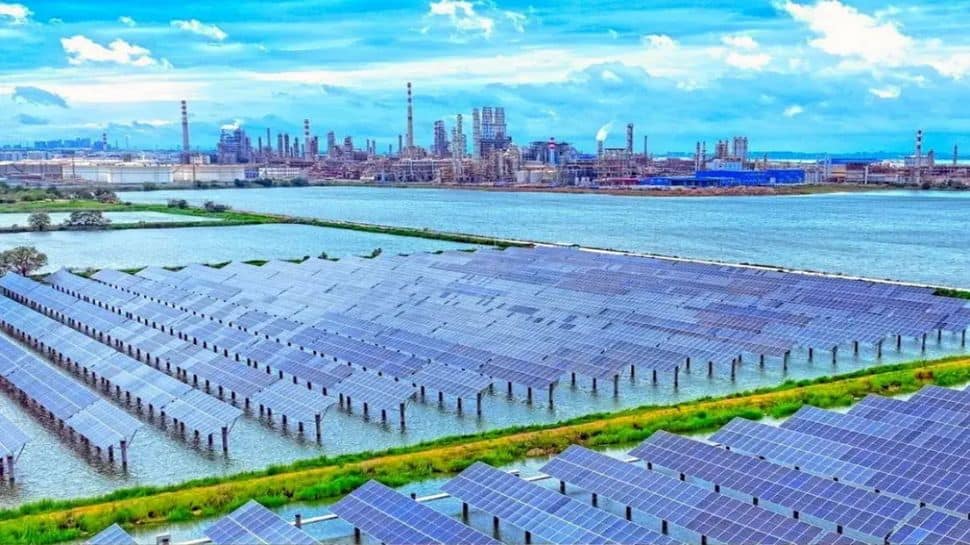

China has achieved a remarkable milestone in energy and water technology with its new facility in Rizhao, Shandong, capable of converting seawater into drinking water and clean fuel for a mere Rs 24 per cubic metre. This cost-effective breakthrough is making waves globally, challenging established energy giants and offering hope for resource-scarce nations.
The innovative plant employs a single apparatus to produce both ultra-pure drinking water and green hydrogen, utilizing only seawater and waste heat from neighboring industrial facilities. This dual output from a single, low-cost process is being heralded as a critical turning point, especially for countries facing water stress and volatile energy prices.
As reported, this facility represents a global first, operating entirely on seawater and surplus industrial heat. Engineers have ingeniously harnessed this waste energy, directing it to power a system that efficiently extracts fresh water and produces clean hydrogen from the ocean. The ingenuity lies in its ‘one input, three outputs’ operational framework.
The core input is seawater combined with industrial waste heat. This combination unlocks three valuable outputs. The system yields 450 cubic metres of drinking water annually from processing 800 tonnes of seawater, providing a significant supply of potable water. Concurrently, it generates 192,000 cubic metres of green hydrogen each year, a fuel celebrated for its environmental benefits and potential to power diverse sectors. The process also produces 350 tonnes of mineral-rich brine, a useful raw material for various chemical industries, ensuring that all byproducts are valuable.