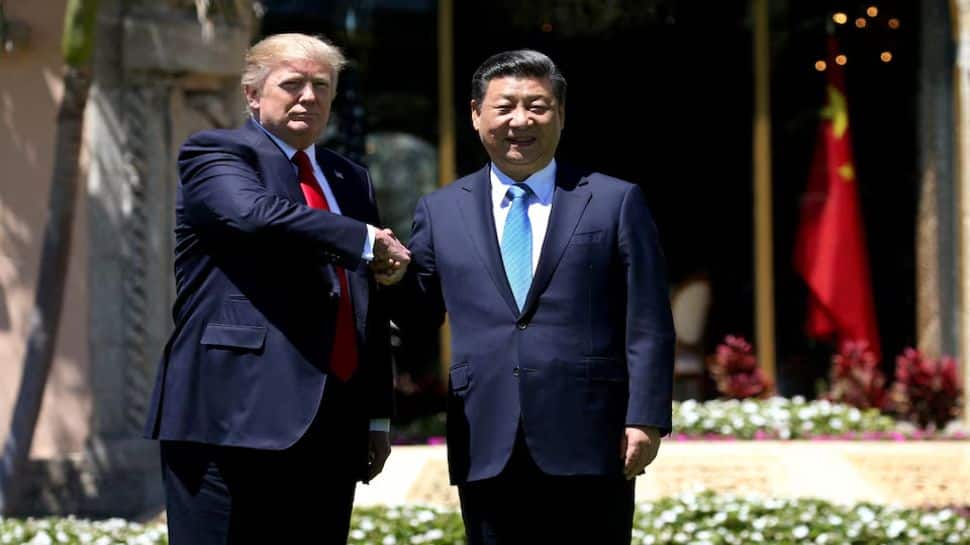

The world holds its breath as US President Donald Trump and Chinese President Xi Jinping prepare for a highly anticipated meeting on October 30th in South Korea, during the APEC summit. This encounter represents a crucial moment in the escalating trade war between the United States and China, with global markets and political observers keenly focused on the outcomes.
The path to this diplomatic summit has been marked by significant economic friction. China initiated a move by implementing stringent controls on its rare-earth mineral exports, a critical component for advanced technologies where China holds a dominant market share.
President Trump responded with a dramatic escalation, announcing his intent to impose a 100 percent tariff on all goods imported from China, a move designed to deliver a powerful economic blow.
Despite the confrontational public exchanges, behind-the-scenes communication remains active. Advisors on both sides acknowledge that avenues for “practical solutions” are still under consideration. Private dialogues continue even as public statements maintain their assertive tone.
Financial markets are reacting with significant volatility, underscoring the widespread concern over the potential economic fallout. President Trump is pushing for a comprehensive trade deal that addresses tariffs and the contentious issue of rare-earth minerals. China, however, has maintained a firm stance, asserting its refusal to be pressured into concessions.
Experts characterize the situation as a strategic contest for global economic supremacy. Key figures in the US administration believe that any Chinese capitulation now would set a precedent for American dominance in future international economic relations.
Conversely, analysts focusing on China suggest that President Xi, with his established leadership position, does not need external validation of his strength. China has strategically deployed economic countermeasures, notably affecting the US agricultural sector, a critical support base for President Trump. This has led to significant shifts in global agricultural trade routes.
Despite facing substantial tariffs, Chinese exporters continue to ship goods aggressively, supported by a weaker yuan. However, China grapples with its own domestic economic challenges, including ongoing issues within its real estate market. Consequently, major American brands are increasingly diversifying their manufacturing bases to countries like India and Southeast Asia to mitigate potential disruptions.
Furthermore, the US has imposed restrictions on advanced technology, impacting China’s access to essential semiconductor chips and slowing its progress in critical technological fields. Beijing’s economic strategists are meticulously tracking every US policy development to anticipate and formulate counter-strategies.
This complex diplomatic and economic confrontation is playing out on a global stage. Investors are acutely aware of how previous tariff threats have impacted market valuations. China’s tightly controlled economic system allows for swift and unified decision-making.
In recent years, China has increasingly utilized trade as a geopolitical lever, often framing the trade dispute with patriotic undertones for domestic consumption. The narrative presented internally portrays the trade war as a test of national fortitude.
US strategists contend that China’s leadership possesses a keen understanding of President Trump’s negotiating style: he respects formidable opponents until certain lines are crossed, at which point he retaliates with unhesitating force. The influence of President Trump’s key advisors in shaping policy during these critical diplomatic periods is also a significant factor.
As preparations are made in Seoul for the summit, the potential for a symbolic handshake and the emergence of preliminary deal frameworks exists. However, the underlying disagreements are substantial, making a comprehensive breakthrough in the near term unlikely. The world is watching this high-stakes negotiation closely, aware that a single misstep could trigger profound economic instability. The central question remains: who will ultimately yield?