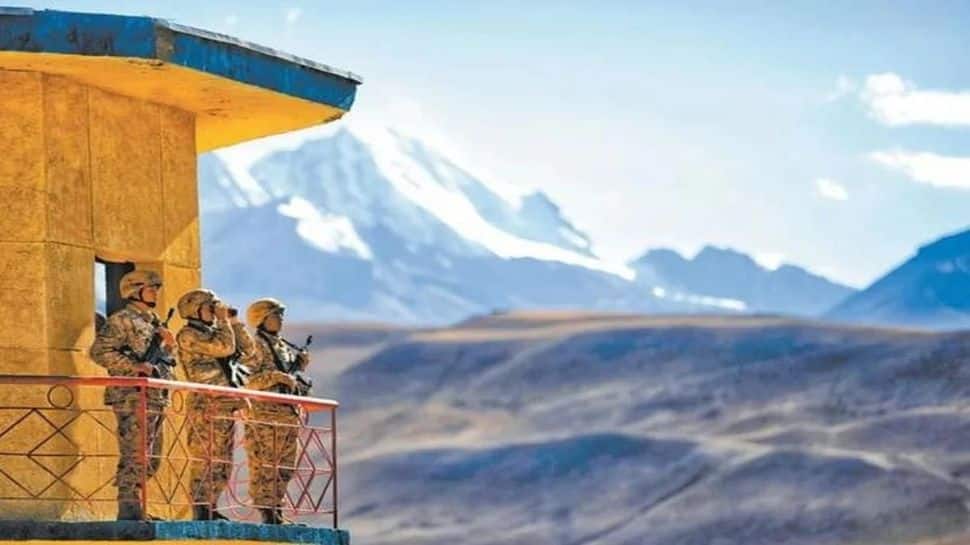

China’s People’s Liberation Army (PLA) has significantly ramped up its military operations and infrastructure development near the Nepalese border, raising geopolitical questions, especially for neighboring India. The Kunmujiya outpost in Zongga County, Tibet Autonomous Region, has become a focal point for this increased activity. Its elevated position provides a strategic vantage point overlooking Nepalese valleys and crucial trade routes, which analysts suggest could be preparation for a broader military strategy impacting the India-China border, including Beijing’s claims on Arunachal Pradesh.
Intelligence suggests extensive patrolling activities are underway in Zongga County. PLA-released videos illustrate a network of patrol points established at altitudes above 5,000 meters, offering unobstructed views of the surrounding areas. This enhanced surveillance capability is critical in the challenging Himalayan terrain. To maintain operational effectiveness year-round, the PLA employs a ‘three-pronged’ patrol methodology. This includes ground teams, specialized all-terrain vehicles for swift movement, and a constant aerial presence via drones, ensuring continuous monitoring regardless of weather or altitude.
The Kunmujiya outpost is a key component of China’s security apparatus along the 1,414-kilometer Nepal border. Its construction amidst harsh winter conditions underscores China’s dedication to fortifying its frontier with advanced infrastructure. The facility is designed for real-time monitoring of vital border crossings such as Gyirong (Rasuwagadhi) and Tatopani, alongside trade and migration pathways, thereby consolidating China’s regional presence and influence.
Further complicating the regional security landscape are reports of Chinese encroachment into Nepalese territory. Official disclosures from Nepal’s agricultural ministry in 2022 documented China’s occupation of 36 hectares of land spread across ten northern Nepalese locations. China has also asserted claims over large tracts of land in multiple border districts. This growing Chinese influence near Nepal is prompting a re-evaluation of Beijing’s strategic long-term objectives and its approach to territorial disputes.