

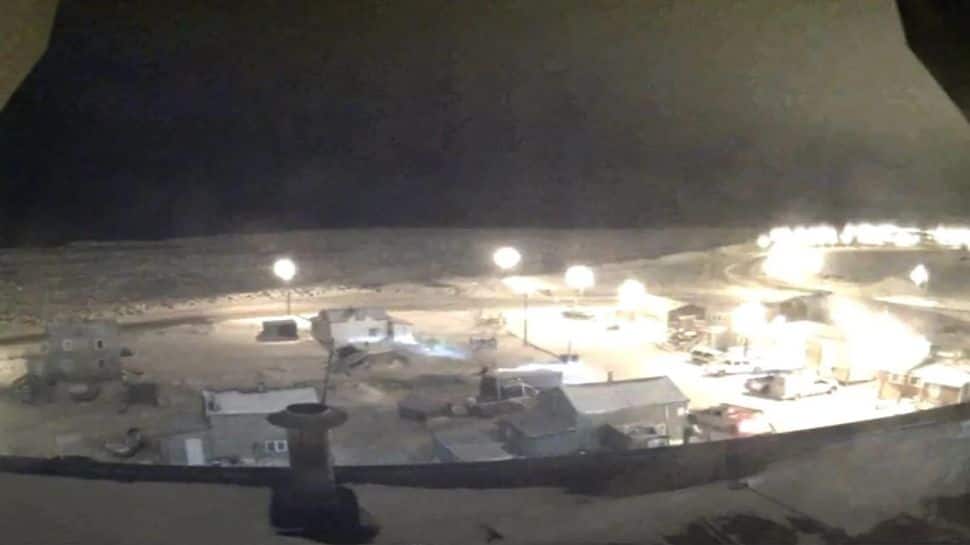

Utqiagvik, Alaska, the northernmost point of the United States, is currently experiencing the profound darkness of its annual polar night. The sun dipped below the horizon for the last time on November 18, 2025, at 1:36 PM, initiating a period of 65 days without daylight. The next sunrise is not anticipated until January 22, 2026. This natural phenomenon, the polar night, occurs when the sun remains continuously below the horizon. Located inside the Arctic Circle, Utqiagvik’s extended darkness is a direct result of the Earth’s axial tilt of 23.5 degrees. During the winter solstice, the Northern Hemisphere is angled away from the sun, preventing daylight from reaching these high latitudes. This contrasts sharply with the summer months, when Utqiagvik enjoys a ‘polar day,’ with the sun visible for 80 to 85 consecutive days. Daylight saving time adjustments this year further emphasized the transition into darkness. The town’s roughly 4,500 inhabitants, many of whom are members of the Inuit community, navigate life under these unique conditions. The absence of natural light can lead to increased fatigue and is linked to seasonal affective disorder (SAD), a condition often managed with light therapy. Despite the challenging conditions, including winter temperatures as low as -20 to -30 degrees Celsius, life in Utqiagvik continues unabated. Schools and businesses operate, with streetlights and home illumination guiding the community. The polar night also fosters a sense of community, with residents often gathering for celebrations like Christmas and New Year’s. It is also prime time to witness the spectacular Aurora Borealis, or northern lights, which illuminate the Arctic sky, attracting tourists seeking this extraordinary spectacle, though extreme cold can limit visitor numbers. Utqiagvik, formerly known as Barrow and renamed in 2016, is a key location for scientific research, particularly in understanding climate change and its impact on the Arctic environment. Although climate change could potentially alter these natural cycles, the polar night continues its traditional occurrence.