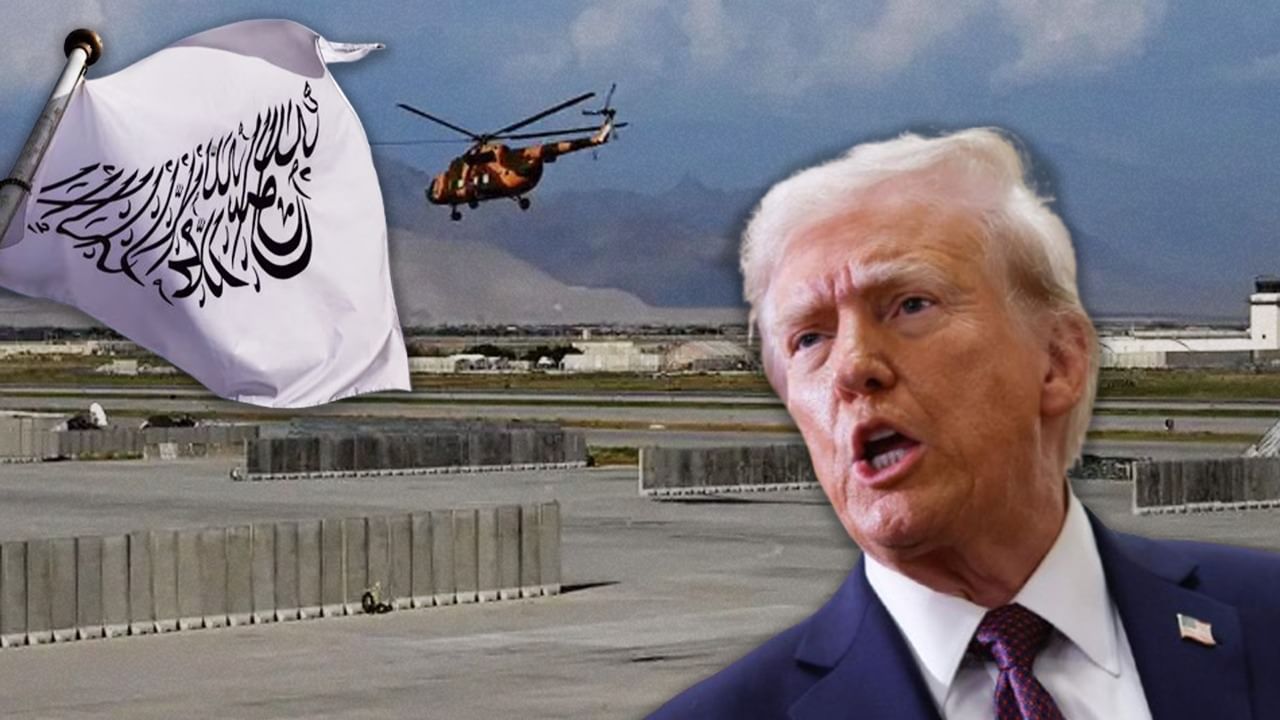

Former U.S. President Donald Trump has expressed interest in regaining control of Bagram Air Base in Afghanistan, presenting a proposal to the Taliban government which was subsequently declined. The Taliban had previously ousted American forces from Kabul in 2021 after a protracted two-decade conflict.
Trump’s proposal seeks to reinstate U.S. military presence in Afghanistan, specifically focusing on controlling the Bagram Air Base. The proposal was met with rejection from the Taliban and strong disapproval from China.
Bagram Air Base, situated in the Parwan province, north of Kabul, is a vital military airbase and one of the world’s largest and most strategically important airfields.
The Soviet Union constructed Bagram Air Base in the 1950s. During the Soviet-Afghan War, it served as the main base for Soviet forces. Following the 9/11 attacks in 2001, the United States gained control of the base.
Throughout the 20-year conflict in Afghanistan, Bagram Air Base functioned as the primary base for U.S. forces. It hosted over 30,000 U.S. soldiers and acted as a key hub for NATO operations.
The base features two extensive concrete runways, capable of accommodating large aircraft such as the C-5 Galaxy and B-52 bombers. It also included an array of infrastructure, including aircraft shelters, fuel storage, medical facilities, detention centers, and intelligence hubs.
Bagram’s geographical location is strategically advantageous, positioned at the crossroads of South, Central, and West Asia, close to the borders of Iran, Pakistan, China’s Xinjiang province, and Russia. The base is situated within close proximity to Xinjiang, where China’s nuclear weapons facilities are located.
From a strategic perspective, Bagram could be pivotal in U.S. efforts to counter Chinese influence, allowing for monitoring of China and Iran. The base could facilitate counter-terrorism operations, drone activities, air strikes, and intelligence gathering. Experts suggest it may serve as a key element in maintaining U.S. influence in Central Asia.
Since the U.S. withdrawal in 2021, the Taliban has controlled the base. While there have been claims of China’s increased presence at the base, these claims lack official confirmation.