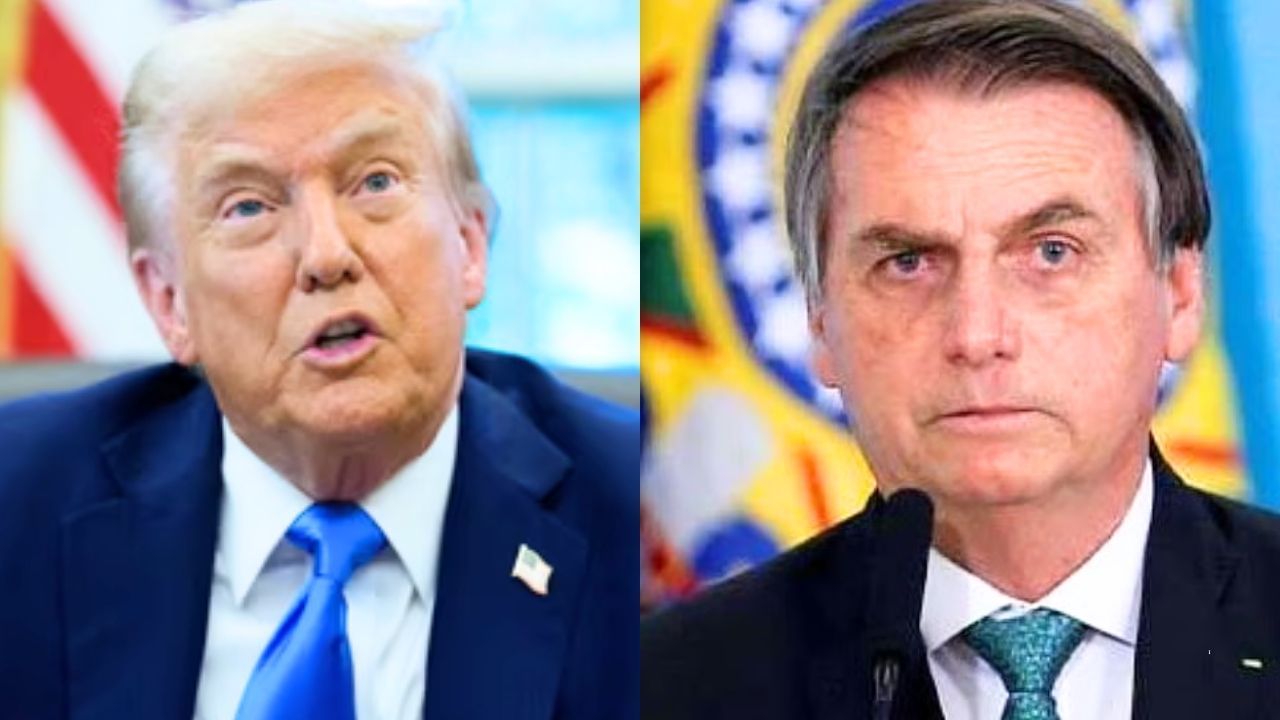

The U.S. government has imposed sanctions on Viviane Barci de Moraes, the wife of Brazilian Supreme Court Justice Alexandre de Moraes, who oversaw the investigation of former President Jair Bolsonaro. This action follows Bolsonaro’s recent 27-year prison sentence for attempting a coup. In addition, the Trump administration revoked the U.S. visa of Jorge Messias, Brazil’s Solicitor-General, who had publicly criticized the ruling.
These sanctions were enacted under the Global Magnitsky Act, a U.S. law targeting individuals implicated in human rights abuses. Justice de Moraes was previously sanctioned under the same act for his role in the Bolsonaro case.
This move is part of a broader pattern of actions taken by the Trump administration against Brazil, which also includes sanctions against other officials and tariffs on Brazilian exports. News reports suggest that other Supreme Court justices who have worked with de Moraes have also had their U.S. visas cancelled, although this has not been officially confirmed. Furthermore, a holding company associated with the de Moraes family is also subject to Magnitsky Act sanctions.
Justice de Moraes has responded, stating that Brazilian institutions are strong and will not be undermined by the Trump administration’s actions. He called the sanctions against his wife an attack on international law, Brazil’s sovereignty, and judicial independence. The U.S. State Department has cited de Moraes’ alleged use of his position to manipulate courts, implement arbitrary pre-trial detentions, and suppress free speech.
The U.S. government’s actions are justified as holding Moraes accountable for alleged abuses of power, including fostering censorship, targeting political opponents, and violating human rights.
Bolsonaro was found guilty of attempting to organize a coup after losing the 2022 presidential election to Luiz Inácio Lula da Silva. He is currently not in prison pending appeal.
Solicitor-General Messias stated that he viewed the U.S. actions as unjust but vowed to continue his work with determination. Brazilian Health Minister Alexandre Padilha announced that he would not attend the upcoming United Nations General Assembly due to restrictions imposed on his U.S. visa, limiting his movement within the country.
The Lula administration protested the late issuance of Padilha’s visa at the United Nations. This resulted in a restriction of his movements within New York City to a limited area near the UN headquarters and his hotel. The Health Minister remained in Brazil and participated in protests against a potential amnesty bill for Bolsonaro.