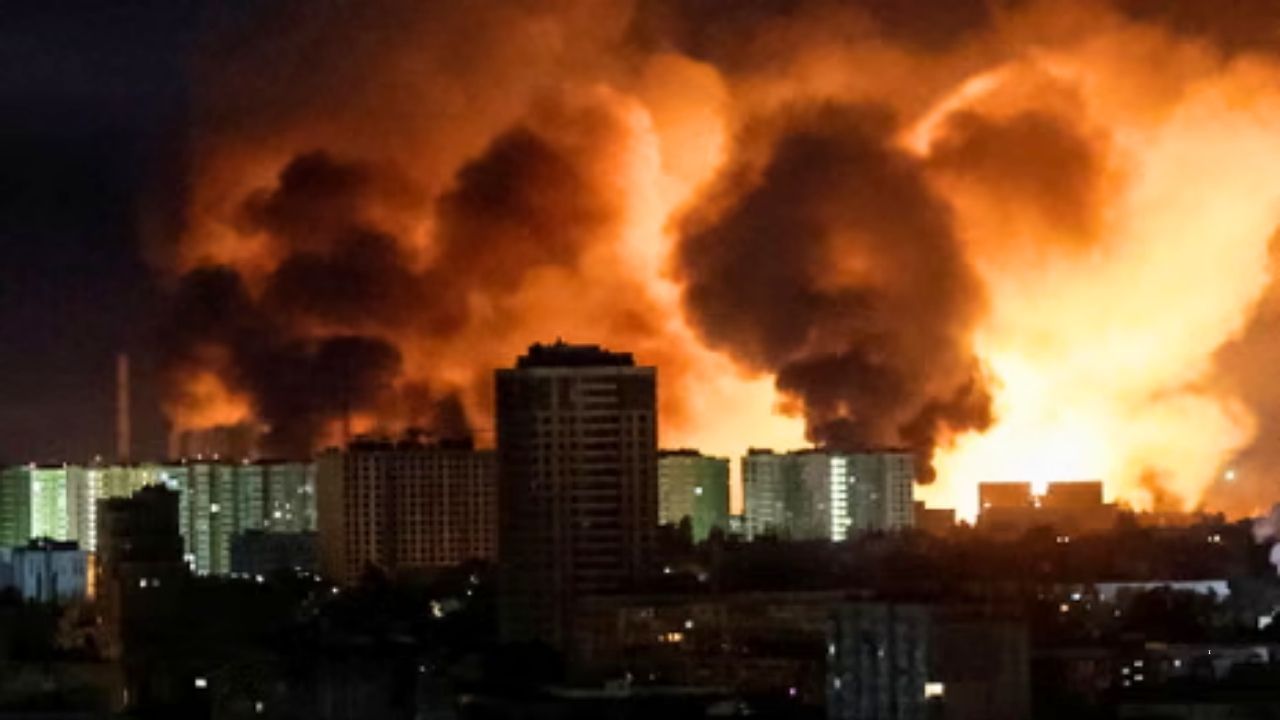

Russia has targeted Ukrainian gas plants, leading to widespread power and gas outages affecting thousands of homes. The attacks, which Ukrainian officials described as a large-scale aerial assault, involved 381 drones and 35 missiles launched on Thursday night.
The CEO of Naftogaz, Serhiy Koretskyi, stated that the attacks were a deliberate attempt to damage critical civilian infrastructure, including gas extraction and processing facilities that are essential for daily life. The attacks are intended to disrupt the normal lives of Ukrainians.
The strikes have resulted in a severe disruption of electricity and gas supplies across several Ukrainian cities, leaving many homes without essential utilities. Ukraine has responded by initiating a large-scale import of gas to address the situation.
According to Koretskyi, the Russian military focused its attacks on Naftogaz’s gas extraction and processing facilities in the Kharkiv region and the Poltava region, utilizing 35 missiles and 60 drones. The attacks caused significant damage to some of the facilities. Russia’s defense ministry announced that its forces targeted the Ukrainian military-industrial complex and the related energy infrastructure using drones and guided weapons.
Reports from Ukrainian officials indicate that the attacks in Poltava resulted in injuries to an eight-year-old child and two women. One of the attacks damaged the historic St. Nicholas Church, shattering many of its windows.
In a retaliatory measure, Ukraine deployed domestically-produced long-range drones to strike the Orsk oil refinery in Russia, approximately 1,400 kilometers (900 miles) from the Ukrainian border, as reported by the head of the Center for Counteracting Disinformation.
Furthermore, Ukrainian drone strikes led to a temporary shutdown at the Azot chemical plant in Berezniki, one of the largest chemical plants in Russia, located 1,500 kilometers (930 miles) from Moscow. The Russian Foreign Ministry reported that Russian air defenses shot down at least 20 Ukrainian drones during the night, with the majority being intercepted over the Black Sea.