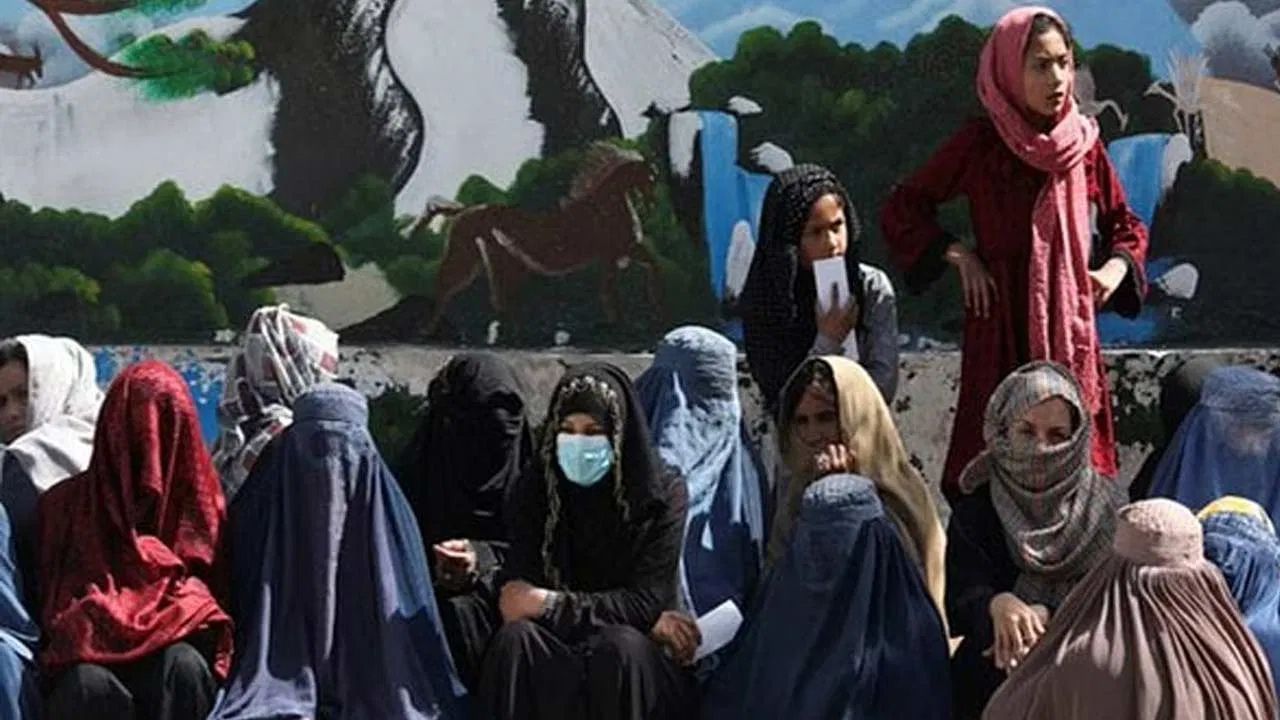

Richard Bennett, the UN’s independent human rights investigator, expressed deep concern over the atrocities inflicted on women under Taliban rule in Afghanistan. In a report presented to the UN General Assembly, Bennett detailed how the Taliban has manipulated the legal and judicial systems to persecute women and girls. These actions, he stated, could be considered crimes against humanity.
Since seizing power in 2021, the Taliban has eliminated provisions within the 2004 constitution that protected the rights of women and girls. These provisions had previously addressed issues such as rape, child marriage, and forced marriage, all of which are forms of violence against women.
Bennett’s report also revealed that the Taliban has dismissed all judges from the former US-backed government, including approximately 270 women. These judges were replaced by individuals aligned with fundamentalist Islamic ideologies and lacking legal expertise. The appointed judges make decisions solely based on Taliban directives. Additionally, the Taliban has taken complete control over law enforcement and investigative bodies, systematically removing Afghan individuals who previously served the prior government.
The situation for women and girls has significantly worsened since the Taliban’s takeover, facing widespread criticism. The report indicates that the Taliban has restricted girls’ education beyond the sixth grade and has imposed restrictions on employment. Women are also prohibited from accessing public spaces, including parks, gyms, and hairdressers. Moreover, new laws limit women’s expression and mandate they cover their faces in public. The Taliban’s restrictions have led to isolation from the West, with recognition solely from Russia.
The Taliban defends its actions by claiming adherence to Islamic Sharia law. However, scholars and others dispute this, asserting that the Taliban’s interpretation differs from that of other Muslim-majority nations and fails to uphold core Islamic teachings on the legal rights of women.
Women under Taliban rule are denied basic rights. The report underscores the absence of female judges, lawyers, and officials in police and other institutions. This leads to a lack of reporting of violence and discrimination against women. Furthermore, the Taliban requires women to be accompanied by a male guardian to file complaints, creating a significant barrier.
Taliban courts often dismiss women’s complaints, and they are hesitant to address cases related to divorce, child custody, and gender-based violence. Faced with these challenges, women are turning to traditional methods like jirgas and shuras for conflict resolution, and some seek assistance from religious leaders or family elders. However, these systems are male-dominated, which often results in injustice for women and girls.
Bennett urged the international community to ensure justice. He highlighted the significance of international forums for delivering justice. He cited the International Criminal Court’s request on January 23 for arrest warrants for two senior Taliban leaders for their role in the gender-based persecution of women. He calls upon all nations to support bringing Afghanistan before the International Court of Justice (ICJ), arguing that the Taliban has violated international agreements prohibiting discrimination against women.