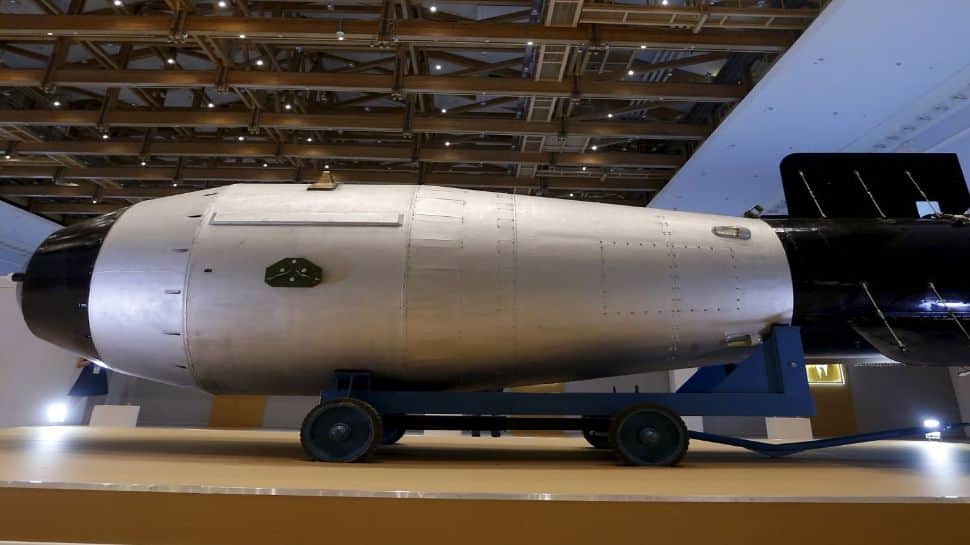

In a significant departure from decades of policy, the United States has announced its intention to resume nuclear testing, breaking a 33-year moratorium. This strategic move, reportedly influenced by the escalating arms development of Russia and China, is framed as a response to maintain American nuclear superiority. U.S. officials highlighted recent tests of long-range nuclear systems by Russia and China’s growing nuclear capabilities as key reasons for the policy reversal. The U.S. claims to possess the world’s largest nuclear arsenal, ahead of Russia and China. The last U.S. underground nuclear test was conducted in 1992, marking the end of 1,054 previous tests and a period focused on arms reduction. This decision marks a clear shift in strategic priorities, aiming to keep pace with geopolitical rivals.
For India, the U.S. decision is prompting a serious re-evaluation of its own strategic defense. Experts, including those who have advised the Indian government, suggest that New Delhi might now find it necessary to conduct a thermonuclear test. This could serve as a vital enhancement to its nuclear deterrent, particularly in light of China’s expanding arsenal. India’s previous attempts at a full thermonuclear yield in 1998 were not entirely successful, but escalating regional tensions could create pressure for New Delhi to demonstrate its technological and strategic maturity. The effectiveness of past international treaties in curbing nuclear proliferation has been questioned, especially in South Asia, where India and Pakistan conducted tests after the global push for a ban. Analysts believe Western nations will need to recognize India’s security imperatives as it considers bolstering its deterrent capabilities.
Commentators in India are drawing historical parallels, recalling arguments for preserving the nuclear test option. Many strategists believe that a fully developed thermonuclear capability is essential for effective deterrence in the current geopolitical climate. While some foresee negative consequences, such as a heightened risk of conflict with Pakistan and a renewed global arms race, others advocate for the strategic necessity of such a capability. The global nuclear landscape currently consists of nine nuclear-armed states with an estimated 13,000 warheads, a substantial reduction from the Cold War era. Open-source intelligence indicates the U.S. and Russia hold the majority of deployed warheads, China’s arsenal is growing swiftly, and India and Pakistan maintain arsenals in the hundreds. The U.S. move is undoubtedly reigniting a crucial global dialogue on nuclear deterrence and strategic stability, particularly in Asia.