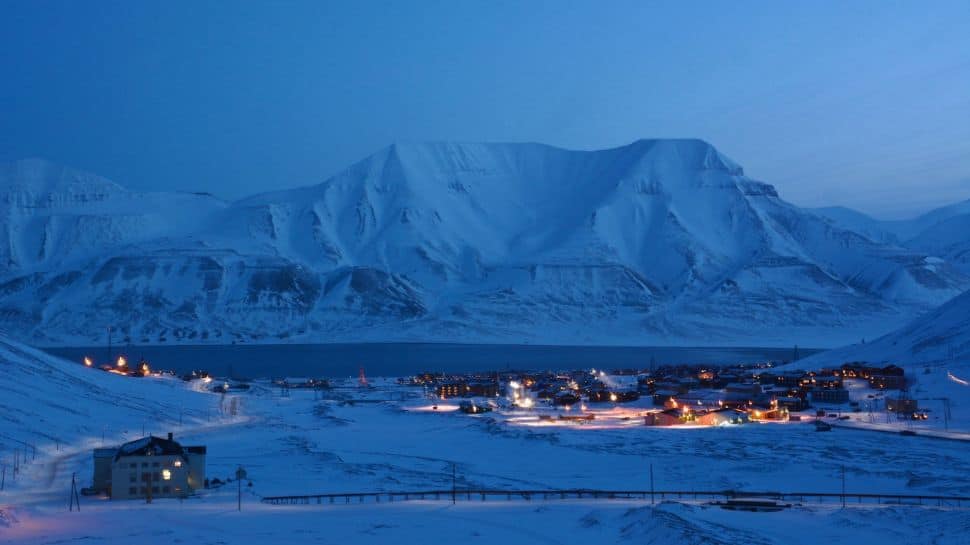

Alert, Canada, the northernmost inhabited point on Earth, faces an astonishing 136 consecutive days without sunlight. This military and research base, located in Nunavut at 817 kilometers from the North Pole, experiences its polar night from October 13th to February 27th. The absence of natural light necessitates a complete reliance on artificial illumination, which can disrupt sleep patterns and overall well-being. Temperatures often plummet to lethal lows, frequently exceeding -40°C, while the extreme remoteness amplifies the psychological challenges for personnel stationed there.
Other polar regions also endure significant periods of darkness. Svalbard and Jan Mayen in Norway face about 111 days of night. Tromsø, Norway, experiences 49 days of darkness annually. Utqiaġvik, Alaska’s northernmost community, is without sunrise for 65 days. Murmansk, Russia, endures approximately 40 days of winter darkness. Greenland’s Ilulissat is shrouded in twilight for weeks starting in late October. At the South Pole Station, the polar night lasts nearly six months, from March to September. This prolonged darkness is a direct consequence of Earth’s axial tilt, which causes the polar regions to face away from the sun during their respective winters.